Vórax · Skyline Blog
How a Restaurant Makes the Most of High Season with Courtesies
Fabián Alvarez6 min read
TL;DR
- A visible courtesy (a drink, an entry or a discount) gets guides, hosts and creators recommending the restaurant.
- Requiring a prior booking avoids unannounced walk-ins and helps spread demand across the week.
- Every booking and redemption gets attributed to whoever originated it, with a ranking of partners by people and spending.
- The restaurant only pays per redeemed courtesy, never for publishing or appearing.
A restaurant in a tourist area makes the most of high season by publishing a courtesy (a drink, an entry or a discount) on Vórax, requiring a prior booking to control table flow, and checking the attribution ranking to see which guide, host or creator brought in the most real customers and spending.
What does "making the most of high season" mean for a restaurant in a tourist area?
It means filling tables during the hours and days when chairs are normally empty, without relying only on people who happen to walk by the door. In high season, a restaurant in a tourist area gets plenty of foot traffic, but competition is just as high: there's a similar spot a hundred meters away. The advantage goes to whoever gets someone trustworthy to recommend their table before the traveler even reaches the street.
That's where Vórax, Skyline's tool for venues, comes in. The logic is simple: the venue publishes a courtesy (a drink, an entry, a discount) that the partner network recommends to travelers and local creators show to locals. The restaurant doesn't pay to publish or to appear: it only pays once that courtesy is actually redeemed, with an invoice behind it.
Let's follow the case of a generic restaurant in a tourist area — call it "The Lookout" — from start to finish: from the moment it publishes its first courtesy to the moment it checks, at month's end, who actually brought in the most tables.
How does The Lookout start with its first courtesy?
The owner of The Lookout decides that, instead of discounting the entire menu during high season, they'd rather give something specific to whoever shows up referred: a welcome drink with dinner. That's exactly the unit Vórax understands: the venue publishes a courtesy (a drink, an entry, a discount) that the partner network recommends to travelers and local creators show to locals.
What the restaurant defines when publishing
- What's being offered: in this case, a welcome drink per reservation.
- For whom: travelers who arrive through the partner network, and also locals who see creators' content.
- What it asks in return: that the table be reserved before arriving.
That last decision — requiring a prior booking — is what turns a loose courtesy into a real planning tool for the kitchen and the floor.
Why is it worth requiring a prior booking instead of walk-ins?
Because a restaurant doesn't run on "hopefully they'll show up"; it runs on knowing how many tables are committed for Friday night. Vórax supports courtesies with prior booking: the traveler leaves their WhatsApp and preferred day, and the venue confirms from its panel; it gets notified by email and WhatsApp.
In practice, this changes the flow of the night for The Lookout. Before, a courtesy without a booking meant people showing up unannounced during peak hours, competing for a table with guests who had reserved through other means. With a prior booking:
- The traveler sees the courtesy recommended by a guide or a host and leaves their WhatsApp and the day they want to go.
- The venue gets notified by email and WhatsApp, and confirms or reschedules from its panel.
- The table is committed in advance, which lets the restaurant spread reservations better across the week instead of taking the full hit on Saturday.
This is especially useful in high season, when a restaurant in a tourist area has packed nights and slow nights in the same week. The prior booking gives the owner a lever to shift demand toward the days that need it most, simply by adjusting which nights the courtesy is offered.
How does the word about the courtesy actually spread?
A published courtesy is useless if nobody recommends it. This is where the difference shows between posting a discount on your own social media and putting it on a partner network: the venue publishes a courtesy (a drink, an entry, a discount) that the partner network recommends to travelers and local creators show to locals.
For The Lookout, that means two different audiences, covered by the same mechanism:
- Travelers: a guide on a city tour, or a host nearby, tells their group: "tonight, if you have dinner at The Lookout, you get a free welcome drink if you book ahead." The traveler leaves their WhatsApp and the day.
- Locals: a local creator posts a piece recommending the restaurant, and whoever sees the content can also book their courtesy.
The restaurant doesn't have to go out and find guides one by one or negotiate with every creator: the courtesy stays available for the network to recommend, and every recommendation gets recorded.
How does The Lookout know who brought in each table?
This is the question that actually matters to a venue owner: if ten different people recommended the courtesy, who actually brought in customers and who didn't? Each referral shows who sent it: a partner ranking by people and spending.
This means that when a traveler books their courtesy because a specific guide recommended it, that booking gets attributed to that guide. If another group arrives because a local creator mentioned it in a post, that arrival gets attributed to that creator. It's not a list of "someone sent us people": it's a ranking ordered by how many people each partner brought in and how much they spent.
What this ranking lets the restaurant see
- Who brings real volume: a partner who sends one booking a month is not the same as one who sends five.
- Who brings spending, not just headcount: a group that shows up and orders little doesn't weigh the same as one that runs through the menu.
- Who's worth prioritizing: if The Lookout wants to launch a new courtesy for the next season, it already knows which guides or creators to notify first.
Over time, this view stops being a simple report and becomes the basis for deciding who to keep working with and who not to, without depending on the owner's memory or loose notes in a notebook.
What happens the day the traveler shows up at the restaurant?
The prior-booking flow solves the planning side, but on the night of the dinner there's another key moment: the redemption. The traveler arrives with their confirmed courtesy, the restaurant validates it, and that redemption gets recorded against the partner who originated the booking. That way, the ranking of who brought in the most tables isn't based on promises, but on visits that actually happened.
For The Lookout, this closes the full loop: it published the courtesy, decided to require a prior booking, the network of partners and creators recommended it, every booking got attributed to whoever originated it, and by the end of the week the owner can see, table by table, which guide, which host or which creator actually brought in real customers.
A different season for the same restaurant
Without this mechanism, The Lookout depended on the luck of foot traffic and on word of mouth that's hard to measure. With a published courtesy, a prior booking requirement and clear attribution, high season stops being a gamble: the restaurant knows which nights to reinforce, who to thank with extra attention, and which partners deserve to be notified first when a new courtesy comes up. It's not magic and it's not a promise of full tables: it's simply knowing, with data, where every customer who sat down that night actually came from.
What to do next
If you run a restaurant, rooftop or club in a tourist area, the first step is to define a single, simple courtesy — something you can sustain even as demand grows — and publish it on Vórax so the partner network and local creators can start recommending it.
Frequently asked questions
Does a restaurant have to pay to publish a courtesy on Vórax?
No, publishing is free. The venue only pays once the courtesy is actually redeemed, with the spending recorded.
What if the restaurant doesn't want bookings, just walk-ins?
Vórax supports courtesies with prior booking specifically for cases where a venue needs to control table flow, but whether to require it is up to the restaurant based on its operation.
How does the restaurant know who brought in the most customers?
Each referral shows who sent it, so the restaurant sees a partner ranking ordered by people brought in and spending generated.
Does this only work for travelers or also for locals?
It works for both: the partner network recommends the courtesy to travelers and local creators show it to locals.
What kind of courtesy should a restaurant publish first?
It's best to start with something simple and sustainable, like a welcome drink, before trying bigger courtesies like discounts or free entries.
Vórax
See Vórax in action
New customers for restaurants, rooftops and clubs: verified-redemption perks recommended by the partner network.
Get started with Vórax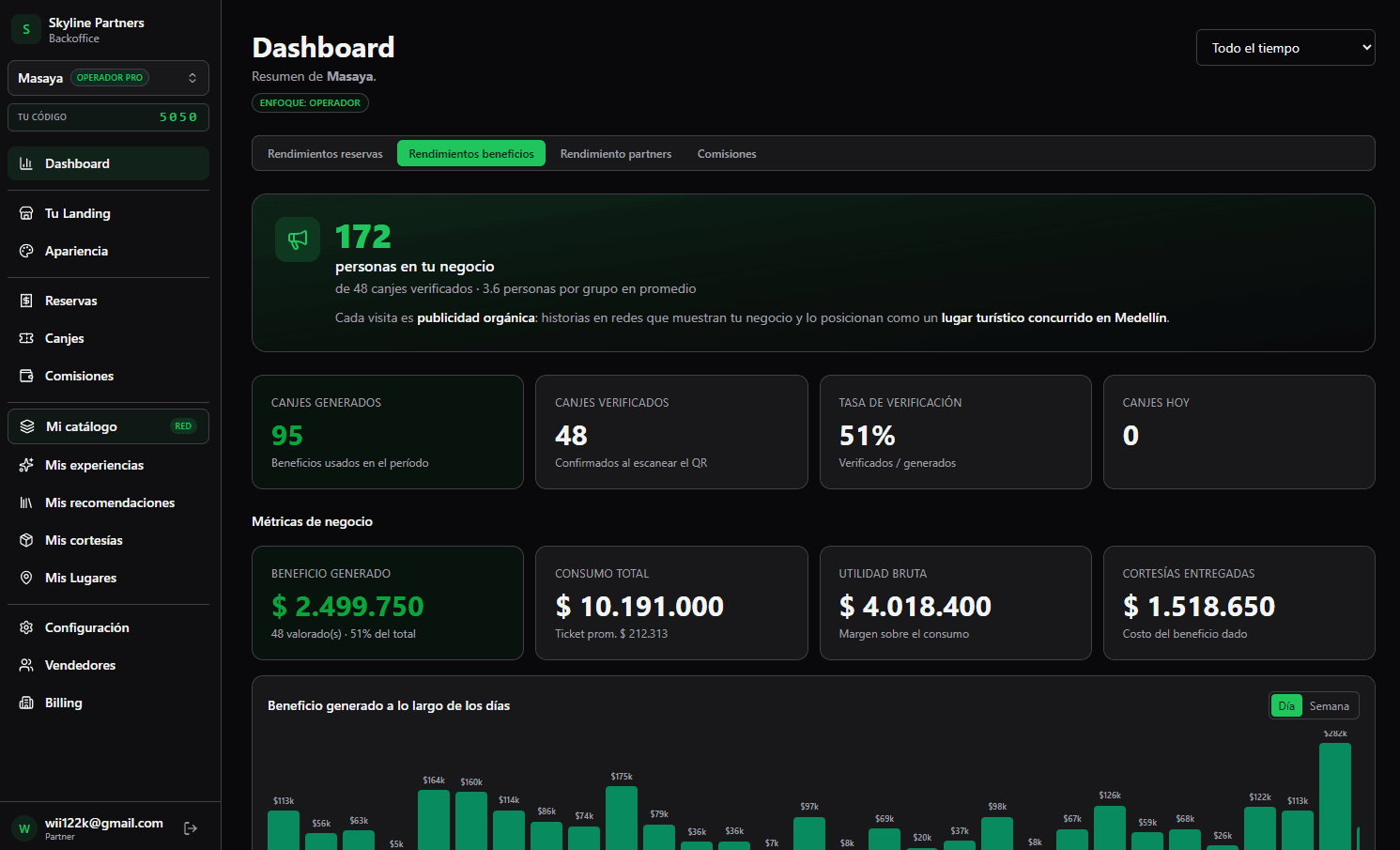
Related · Vórax
How to Settle Redeemed Courtesies With Partners Monthly
Vórax attributes every redemption to the partner who originated it, no spreadsheets needed.
ReadBring New Customers to Your Restaurant Without Paying for Ads
You publish a courtesy (a drink, an entry, a discount) and the partner network and local creators recommend it.
ReadInvoice-Verified Spending in a Courtesy: What It Means
It's the record of people served and real spending a venue logs after redeeming a courtesy, backed by an invoice.
Read