Draco · Skyline Blog
How a Travel Agency Handles Nighttime Chats with AI
Fabián Alvarez6 min read
TL;DR
- Vega, Draco's chat agent, replies to overnight leads without the human team being awake.
- Low intensity limits how many messages Vega sends and keeps it from chasing the customer.
- Draco starts in copilot mode and moves to autonomous once the team trusts it, with the option to revert.
- Axel reviews the team's performance every night and turns it into coaching, without talking to customers.
- The human team picks up in the morning with the full context of the overnight conversation.
An agency sets up its overnight funnel with low intensity for Vega, Draco's chat agent, which replies and quotes from the real catalog without chasing the customer. It starts in copilot mode, moves to autonomous once trusted, and the human team picks up in the morning with full context; Axel reviews performance every night.
What happens to leads that come in at 11 pm?
A travel agency selling trips to a beach destination, a mountain town or a national park knows leads don't respect office hours. People browse, compare and write at night, after work, when they finally have time to plan a vacation. If nobody replies until the next day, that lead has already gotten a quote from someone else.
Draco, Skyline's AI CRM, is built for that dead zone. A team of five AI agents with distinct roles splits the work of handling chats, qualifying leads, analyzing performance and following up, so the agency doesn't depend on a person being awake at that hour to avoid losing the sale.
Which agent handles the night shift, and how does it decide how autonomous to be?
The agent that talks to the customer in real time is Vega: it recommends from the catalog, quotes, builds packages and carries the sale through to payment. It's the one that picks up that 11 pm message while the rest of the team sleeps.
Draco doesn't force an agency to hand everything to the AI on day one. It starts in copilot mode: the AI drafts the reply and a person approves or corrects it before sending. That gives the agency time to watch how Vega responds, adjust the tone and fix anything off-brand, before moving to autonomous mode. And if something goes wrong, the team can revert at any time without losing the setup.
Vega's intensity is set per funnel: low, medium or high, with a hard cap of messages per reply and a fixed stance of never chasing the customer. For the overnight slot, many agencies choose low intensity: Vega replies, handles the basics and leaves the door open, without chaining questions or pressuring someone who probably just wanted information before going to bed.
A full case: an agency selling beach-town trips
Picture an agency with three people on the sales team, handling chats over WhatsApp and Instagram, selling packages to a beach town, an island and a coffee-region destination.
The lead arrives
Someone writes at night asking about a sunset catamaran plan for two people, with dates for next month. The whole human team has already clocked out.
Because the agency set up its "beach town" funnel with low intensity for Vega, the AI agent replies with a short, warm message, in the tone the agency defined, without sounding like a bot. It recommends from the real catalog — only experiences that actually exist, with real prices and availability — puts together an initial proposal with the catamaran and a couple of alternatives, and asks if the lead wants the full plan with pricing.
The reply and the limit
The lead comes back with another question: does the plan include transport from the hotel? Vega answers that too, within the message cap configured for that funnel. It doesn't push, doesn't send three messages in a row demanding a reply, doesn't offer a last-minute discount to close fast. The stance of never chasing the customer holds even though it's the AI doing the writing.
The lead says they'll think about it and reply tomorrow. Vega doesn't write again that same night. The conversation stays open, with all the context saved: what was asked, what was offered, where it was left.
The next morning
When the human team logs in, they find the conversation in the inbox, already with the quote built and the transport objection answered. There's no starting from zero or guessing what the customer wanted: they read the full thread, with the original message, Vega's reply and the pause.
From there, someone on the team picks up with a follow-up message, checks if anything needs adjusting in the plan, and carries the conversation through to payment. The repetitive work — explaining the catalog, quoting, answering logistics questions — is already done. What's left for the human is closing.
The analysis running in the background
While the human team sleeps and then gets to work, Axel does its job: every night it reviews how the team handled chats (humans and Vega) and turns that into metrics and coaching. Axel doesn't talk to customers, it only analyzes.
Reviewing that night's conversation, Axel might notice, for example, that the transport question keeps coming up across several conversations in the beach-town funnel, and that it's worth adding to Vega's very first reply. That kind of adjustment isn't decided by the AI alone: the person responsible for the team sees it in Axel's report and decides from there whether to update the funnel's script.
Why not just use a rule-based chatbot for the night shift?
A rule-based chatbot only repeats fixed answers: if the customer asks something outside the decision tree, it gets stuck or tells the customer to wait until the next day anyway. Vega, on the other hand, recommends from the real catalog, builds a full quote and answers follow-up questions within the same conversation, without breaking brand tone or introducing itself as a virtual assistant.
The difference also shows up in what happens after the nighttime message. A rule-based chatbot doesn't score the lead, doesn't leave readable context for the human, and doesn't analyze itself. With Draco, the conversation arrives in the morning with full information and, on top of that, becomes a source for improving the funnel.
| Rule-based chatbot | Vega (Draco) in overnight autonomous mode | |
|---|---|---|
| Answers questions outside the script | No | Yes, within the real catalog |
| Quotes with real prices | No | Yes |
| Respects a message cap without chasing | Depends on manual setup | Yes, by design, configurable per funnel |
| Leaves readable context for the human next day | Limited | Full, with conversation history |
| Gets audited and improved over time | No | Yes, via Axel |
How does an agency start trusting overnight autonomous mode?
There's no need to flip on full autonomy on day one. Here's the typical path:
- Set up the funnel for the city or product with its own knowledge, mission and buyer persona.
- Start in copilot mode: Vega drafts the overnight reply, but someone on the team approves or corrects it before it goes out, even the next day.
- Set the intensity to low for that funnel, with whatever message cap the agency finds comfortable.
- Watch the first results and use the approve-or-correct buttons: every correction feeds the AI.
- Switch to autonomous once the team trusts that Vega replies well without real-time supervision, knowing it can revert at any time.
What if the nighttime lead needs something Vega can't solve?
If the conversation gets complicated — special pricing, complaints, something outside the catalog — the stance of never chasing and the message cap keep the AI from forcing an answer it doesn't have. The conversation stays in the inbox, visible to the human as soon as their day starts, with full context of what was already discussed.
What to do next
If your agency gets messages outside business hours and today you reply the next day with no context of what the customer actually asked, the first step is to set up a funnel with low intensity for Vega and start in copilot mode, to see how it responds before handing it the whole night.
Frequently asked questions
Can Vega handle the whole night alone with no human review at all?
It can, but Draco recommends starting in copilot mode before switching to autonomous, so the team can watch how it replies and correct anything off-brand. Once the team trusts it, full autonomy gets switched on, and it can be reverted at any time.
What does low intensity mean for Vega?
It's one of three intensity levels set per funnel, along with a cap on messages per reply. For the overnight slot, low intensity makes Vega reply without chaining questions or pressuring the customer to close fast.
What happens if the overnight lead never writes back?
The conversation stays in the inbox with full context: what was asked, what was offered, and where it was left. The human team picks it up when they log in, with no need to rebuild the story from scratch.
Who checks whether Vega is replying well at night?
Axel, another of Draco's five agents, runs a daily review of the team's chat performance, including Vega's, and turns it into metrics and coaching. Axel doesn't talk to customers, it only analyzes the team.
Can an agency use low intensity only at night and something different during the day?
Intensity is set per funnel, so an agency can have a specific overnight funnel with low intensity and a separate daytime funnel with a different intensity.
Draco
See Draco in action
The AI CRM for agencies and tour operators: WhatsApp, Instagram, Messenger and TikTok in one inbox, handled by five AI agents.
Try Draco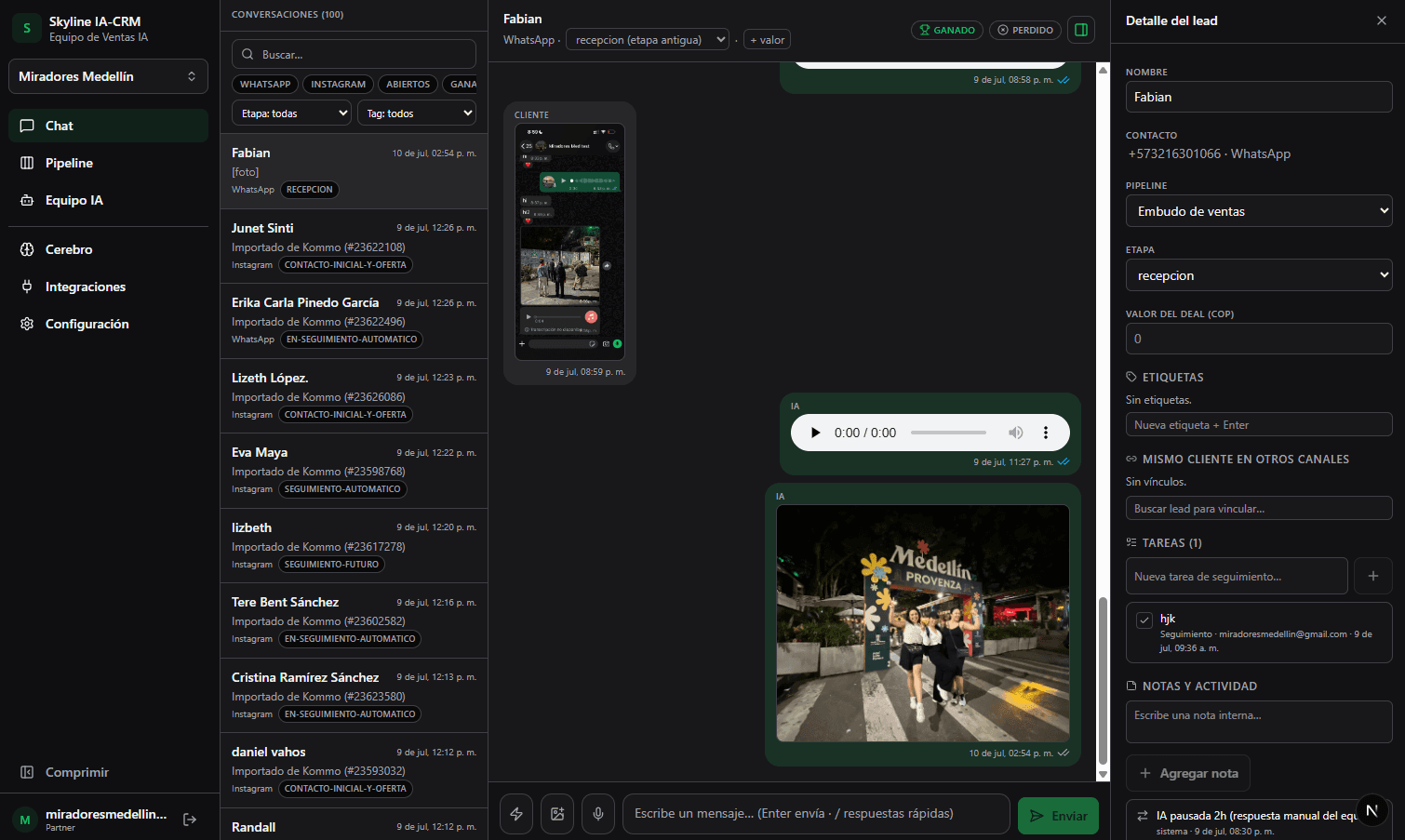
Related · Draco
How to Get Your Agency's CRM Ready for December
Start preparing four to six weeks before December, not in the final week.
ReadComment-to-DM: Turn IG and TikTok Comments into Sales
Comment-to-DM sends an automatic direct message to anyone who comments on an Instagram or TikTok post.
ReadHow to Tune a Sales AI's Intensity Without Chasing Customers
Vega (low, medium, high) controls how proactive she is in real time within an active conversation.
Read