Vorax · Skyline Blog
How Do I Measure If a Courtesy Was Profitable?
Fabián Alvarez5 min read
TL;DR
- A redemption only proves the courtesy was used, not that it was profitable.
- Real profit comes from invoice-verified spending and benefit per courtesy, based on people served.
- Attribution shows which partner brought each customer, with a ranking by people and spending.
- Compare that benefit against what you pay in commission to decide whether to keep the courtesy.
You measure a courtesy's profit with the invoice-verified spending you log after each redemption, not with the number of redemptions. Vórax calculates the benefit per courtesy from people served and that verified spending, and attribution shows which partner brought each customer, with a ranking by people and spending.
The short answer in practice
A courtesy is profitable when the spending it generated, invoice-verified, is higher than what you paid in commission to bring that customer in. Vórax, Skyline's tool for venues, doesn't stop at counting redemptions: after each redemption it asks you to record people served and invoice-verified spending, and from that it calculates the benefit per courtesy. That's the number that matters, not how many times the QR was scanned.
A restaurant in Provenza, for example, published a welcome courtesy (a welcome drink with dinner) and in one month got 32 customers from 9 redemptions. The redemption count alone says little. What decides whether that courtesy is worth it is how much those 32 people spent once they were seated at the table, and you only know that with invoice-verified spending.
Why isn't counting redemptions enough?
Counting redemptions tells you people showed up. It doesn't tell you if they spent, how much they spent, or who brought them. A venue that only measures "how many QR codes got used" can end up paying commission for customers who showed up, took the courtesy and left without consuming anything else. The redemption is the starting point, not the result.
That's why Vórax separates two moments: the redemption (when the traveler presents the QR and it's marked as used) and the follow-up record, where the venue logs people served and invoice-verified spending. That second step is what turns a redemption into real business data, with the benefit per courtesy calculated from there.
What does "invoice-verified spending" mean?
It means the sales figure you attribute to a courtesy doesn't come from an estimate or from what the waiter remembers, but from the actual invoice that table generated. After the redemption, the venue records people served and invoice-verified spending, and Vórax shows the benefit per courtesy with that data as its base. This keeps you from inflating, or underestimating, the result of a promotion.
For a restaurant, this solves a typical problem: knowing whether a "free starter" courtesy actually brings in people who order a main course and drinks, or whether it only attracts people looking for something free and nothing more. Without a verified invoice, that question stays in the owner's gut feeling. With it, it becomes a number.
How do I know who brought each customer?
This is where attribution comes in. Each referral shows who sent it, with a partner ranking by people and spending. This means you don't just know how much a courtesy generated in total, you know which specific partner —an ambassador, a local creator, a network operator— brought more people and more spending.
For a restaurant with several partners recommending the same courtesy, this changes the conversation. Instead of paying the same commission to everyone, you can see who actually converts: who brings people who spend, and who brings visits that leave nothing behind. That clarity is what lets you decide which partners to keep working with and which commissions to adjust.
Example: a rooftop with two active courtesies
Picture a rooftop downtown running two courtesies at once: a welcome cocktail and a discount on the bill for groups. Without a system that records invoice-verified spending, the owner only has two loose numbers: how many QR codes got scanned for each one. There's no way to know which of the two actually fills the register.
With the Vórax panel, after each redemption the team logs people served and invoice-verified spending. After a few weeks, the owner can compare the benefit per courtesy of both promotions and keep the one that truly converts into sales, not the one that just looks more popular.
How do I read the panel step by step?
1. Check the redemption when it happens
When the traveler arrives with their QR, the venue scans it (with an optional 4-digit code) and the system prevents it from being used twice. That's the first data point: the courtesy was used.
2. Record people served and invoice-verified spending
After the redemption, log how many people came in with that courtesy and how much they spent, backed by the actual invoice. This step is what turns the redemption into useful information for decision-making.
3. Check the benefit per courtesy
With those two data points, the panel shows the benefit per courtesy: what that promotion generated versus what it cost in commission. That's the figure that tells you whether to keep the courtesy or adjust it.
4. Check the partner ranking
Each referral shows who sent it, with a partner ranking by people and spending. Use that ranking to see which partners bring customers who actually spend and which ones only generate traffic without sales.
5. Decide whether to adjust the courtesy or the commission
With the benefit per courtesy and the partner ranking in hand, decide whether it's worth keeping the courtesy as is, swapping it for another one, or adjusting the commission you pay to whoever brings you customers.
How does this compare to tracking it manually?
Keeping this control by hand —with spreadsheets, for example— forces you to manually cross-reference who brought each customer, how much they spent, and what commission applies, table by table. It's work that grows with every new partner and every active courtesy.
| What you need to know | With spreadsheets | With Vórax |
|---|---|---|
| Who brought the customer | You have to ask or write it down by hand | Automatic attribution per referral |
| How much that table spent | Depends on someone logging it separately | Invoice-verified spending, recorded after the redemption |
| Whether the courtesy was profitable | A separate calculation, cross-referencing several sources | Benefit per courtesy visible in the panel |
| Paying partners | Building the payment statement by hand | Settlement with a WhatsApp-ready statement |
The difference isn't just convenience. It's that attribution and verified spending stay linked from the source, in the same system where the courtesy was issued.
What to do now
If your restaurant already has a courtesy running, check the benefit per courtesy in the panel this week before deciding whether to keep it as is. If you don't have one active yet, you can publish your first courtesy from Vórax and start seeing people served, invoice-verified spending and the partner ranking from the very first redemption.
More about Vorax: vorax.skyln.co
Frequently asked questions
Does a redemption already mean I made money from the courtesy?
Not necessarily. A redemption only confirms the traveler used the courtesy. Real profit is measured with the invoice-verified spending you record afterward, which is used to calculate the benefit per courtesy.
What happens if I don't record invoice-verified spending after the redemption?
Without that record you don't have the data needed to calculate the benefit per courtesy. The panel is designed for the venue to log people served and invoice-verified spending right after each redemption.
How do I know which partner brings customers who actually spend?
Check the partner ranking by people and spending inside the panel. Each referral shows who sent it, so you can compare partners and decide who to keep working with.
Do I need to pay anything to start measuring this?
No. Starting a courtesy in Vórax is free; you only pay per redeemed courtesy, and you can record invoice-verified spending from the very first redemption.
Does this work if I have several courtesies running at the same time?
Yes. You can compare the benefit per courtesy of each promotion separately and keep the one that actually drives spending, not just the one with the most QR activity.
Vorax
See Vorax in action
New customers for restaurants, rooftops and clubs: verified-redemption perks recommended by the partner network.
Get started with Vorax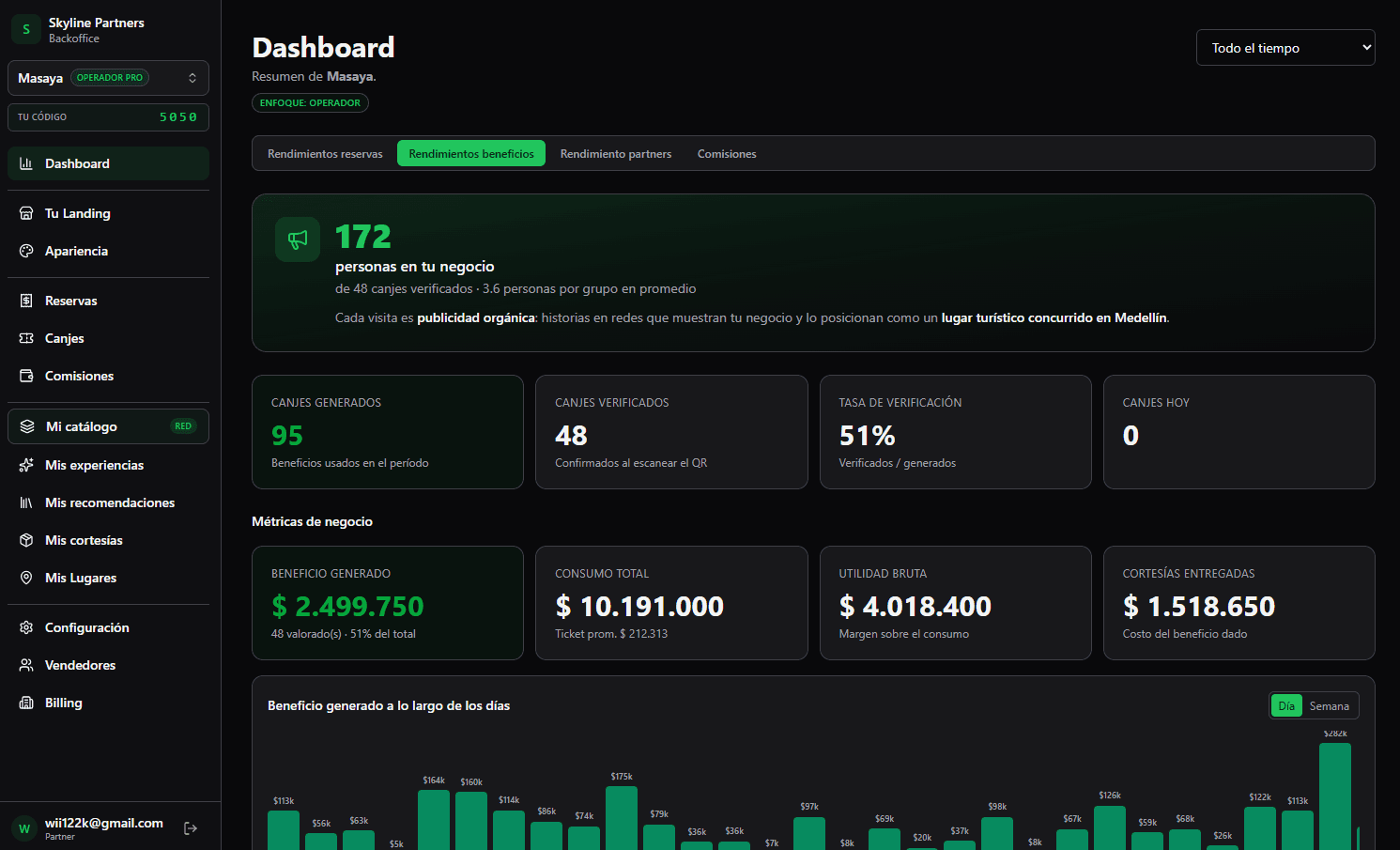
Related · Vorax
How to Prevent Double Redemptions and Fraud with Courtesies
Each courtesy QR is single-use and gets blocked automatically after the first redemption.
ReadHow a Restaurant Makes the Most of High Season with Courtesies
A visible courtesy (a drink, an entry or a discount) gets guides, hosts and creators recommending the restaurant.
ReadHow to Settle Redeemed Courtesies With Partners Monthly
Vorax attributes every redemption to the partner who originated it, no spreadsheets needed.
Read