Vórax · Skyline Blog
How to Prevent Double Redemptions and Fraud with Courtesies
Fabián Alvarez7 min read
TL;DR
- Each courtesy QR is single-use and gets blocked automatically after the first redemption.
- The optional 4-digit code adds a second check on high-traffic nights.
- After redemption, the venue records invoice-verified spending, not just that someone walked in.
- A weekly review of the partner ranking and spending catches patterns that technical controls alone cannot block.
- Adjusting a courtesy's conditions, not just pausing it, usually fixes high redemptions with low spending.
Prevent it with three layers: a single-use QR that the system blocks after the first redemption, an optional 4-digit code to verify on the spot, and a weekly review of invoice-verified spending. This combination closes both coupon forwarding and courtesies that attract people without generating real spending.
Why does a club lose money with poorly controlled courtesies?
A courtesy without technical controls is an open invitation to fraud. If the QR can be reused, if there's no way to confirm the person presenting it is the right one, and if nobody reviews the numbers weekly, the venue ends up paying commissions on redemptions that never generated real spending or, worse, on the same redemption repeated several times in one night.
Think of a club that launches a "free entry before 11pm" courtesy to attract new people on a Thursday. If the doorman only glances at a screenshot of the QR, anyone can forward it to five friends and all five get in free with the same coupon. That's the scenario you need to prevent by design, not fix later with a spreadsheet.
How does Vórax prevent double redemption?
Vórax, Skyline's tool for venues, solves this with automatic issuing, confirmation and redemption: the traveler gets a QR, the venue scans it with an optional 4-digit code, and there is no double redemption. It's not a policy that depends on the doorman remembering a rule; it's a restriction the software enforces on its own.
The single-use QR
Every courtesy that comes out of the partner network generates a unique QR, tied to that person and that specific courtesy. The moment someone scans it and the redemption is confirmed, the code gets marked as used. If another person tries to present it later — even the exact same code, forwarded as a screenshot — the system no longer recognizes it as valid. This removes the most common fraud scenario in bars and clubs at the root: the coupon that circulates through group chats.
For a club, this means there's no need to keep a paper list or rely on the doorman's memory. The control lives in the QR itself.
The 4-digit code as a second layer
Beyond scanning, Vórax lets you require an optional 4-digit code at the moment of redemption. This extra layer matters most at the busiest entry points: a Thursday night with a long line, a special event, or any time the doorman doesn't have time to look closely at every screen.
The code works as a quick check: the traveler knows it because it arrived with the QR, and whoever presents it should be able to say it. If someone tries to use a QR that isn't theirs, they likely won't have the code handy. It's a small bit of friction for a real customer and a real barrier for someone trying to sneak in with someone else's coupon.
A useful example: a club with heavy social media traffic can turn on the 4-digit code only on its busiest nights, when the risk of someone trying to reuse a coupon is higher, and leave it off on weekdays when volume is low and the team has time to verify each redemption calmly.
What happens after the redemption?
Confirming the redemption isn't the end of the process, it's the halfway point. After redemption, the venue records people served and invoice-verified spending, and sees the benefit per courtesy. This is the part that actually tells the owner whether the courtesy is working or whether it's just giving away entries without translating into bar spending.
Why the invoice matters more than the redemption
A confirmed redemption tells you someone walked in. The invoice tells you whether that person spent anything while they were there. These are two different data points and both matter. A club can have a courtesy with many redemptions but low spending — people who get in free and don't order anything else — or a courtesy with few redemptions but high spending per person. Without the verified-spending data, the owner only sees half the picture.
This tracking is what lets you decide, with data instead of intuition, whether it's worth continuing to pay a commission on a specific courtesy or whether it needs adjusting.
What to do with the spending data
- Compare verified spending against the commission paid per redemption to know if the courtesy has margin.
- Identify which courtesies attract people who then spend and which only attract people who come in and leave.
- Adjust the type of courtesy (a drink instead of free entry, for example) if average spending is low.
What should you check every week to prevent fraud?
Technical controls — single-use QR and the 4-digit code — reduce fraud at the moment of redemption. But the weekly review is what catches patterns the automatic system doesn't block on its own, like a partner who brings in a lot of people who never spend, or a courtesy that generates redemptions but no invoice afterward.
Weekly checklist for the owner or shift manager
- Review the partner ranking by people and spending. Each referral shows who sent it, so you can see if a partner has many redemptions but low verified spending, a sign something doesn't add up.
- Cross-check confirmed redemptions against recorded invoices. If the number of people served grows but verified spending doesn't move in the same proportion, that courtesy needs a closer look.
- Check who is using the 4-digit code and who isn't. If on the busiest nights the team isn't asking for the code, that second layer of control isn't doing anything.
- Look at the settlement with partners before paying. The ready-to-send statement and payment history help confirm that what's about to be paid matches real, verified redemptions, not loose numbers.
- Adjust commissions or courtesy conditions when odd patterns appear. If one courtesy consistently shows high redemptions and low spending, it's often better to change the condition (requiring a minimum group, for example) than to pause it entirely.
What to do if you spot a suspicious pattern
If in a given week a partner shows up with a number of redemptions that doesn't match the spending it generates, the first step is to look at the detail of those specific redemptions: what time they happened, whether they used the 4-digit code, and whether the original QR matched a single person or shows signs of having circulated among several. Since every redemption is tied to a single-use QR, any reuse attempt would already have been blocked automatically, so a high number of legitimate redemptions from the same partner usually reflects real traffic, not fraud. The pattern to actually watch for is different: courtesies with many redemptions but consistently low verified spending, which usually points to the type of courtesy not attracting the right customer, rather than a technical security problem.
Summary table: fraud control layers
| Control layer | What it solves | When to use it |
|---|---|---|
| Single-use QR | Eliminates forwarding and reuse of the same coupon | Always, it's automatic |
| 4-digit code | Verifies the person presenting the QR knows it firsthand | High-traffic nights or events |
| Invoice-verified spending | Measures whether the courtesy generates real spending, not just entry | Weekly review |
| Partner ranking | Detects redemption patterns without associated spending | Weekly review |
What a club should not do
Relying on the doorman to remember faces, or on an Excel list updated by hand, is in practice having no control at all. Fraud with courtesies almost always shows up at the points where the process depends on someone's memory or goodwill at the door, not on a rule the system enforces on its own. The combination of a single-use QR, an optional 4-digit code, and a weekly review of verified spending closes all three doors at once: the reused coupon, the borrowed coupon, and the courtesy that gives away entries without bringing in real spending.
What to do now
If your club already hands out courtesies through social media or partners and today relies on screenshots or a paper list, the next step is to turn on single-use QR scanning and decide which nights you'll also require the 4-digit code. After the first week, sit down and look at verified spending per courtesy before adjusting anything.
More about Vórax: vorax.skyln.co
Frequently asked questions
What happens if someone tries to use a courtesy QR that's already been redeemed?
The system won't recognize it as valid because each QR is single-use and gets marked automatically once the first redemption is confirmed. It doesn't depend on the doorman remembering it.
Is the 4-digit code required on every redemption?
No, it's optional. Many venues turn it on only for busier nights or events where the risk of forwarded coupons is higher.
How do I know if a courtesy is actually bringing in customers who spend?
By checking the invoice-verified spending recorded after redemption, not just the number of people served. High redemptions with low spending is a sign to adjust the courtesy.
What should I check weekly besides redemptions?
The partner ranking by people and spending, the cross-check between redemptions and invoices, and the settlement before paying commissions. This catches patterns the QR's technical control doesn't block on its own.
Does it cost anything to activate courtesies at my venue?
There's no cost to start; you only pay per redeemed courtesy, which aligns spending with real results instead of paying for exposure with no guarantee of actual spending.
Vórax
See Vórax in action
New customers for restaurants, rooftops and clubs: verified-redemption perks recommended by the partner network.
Get started with Vórax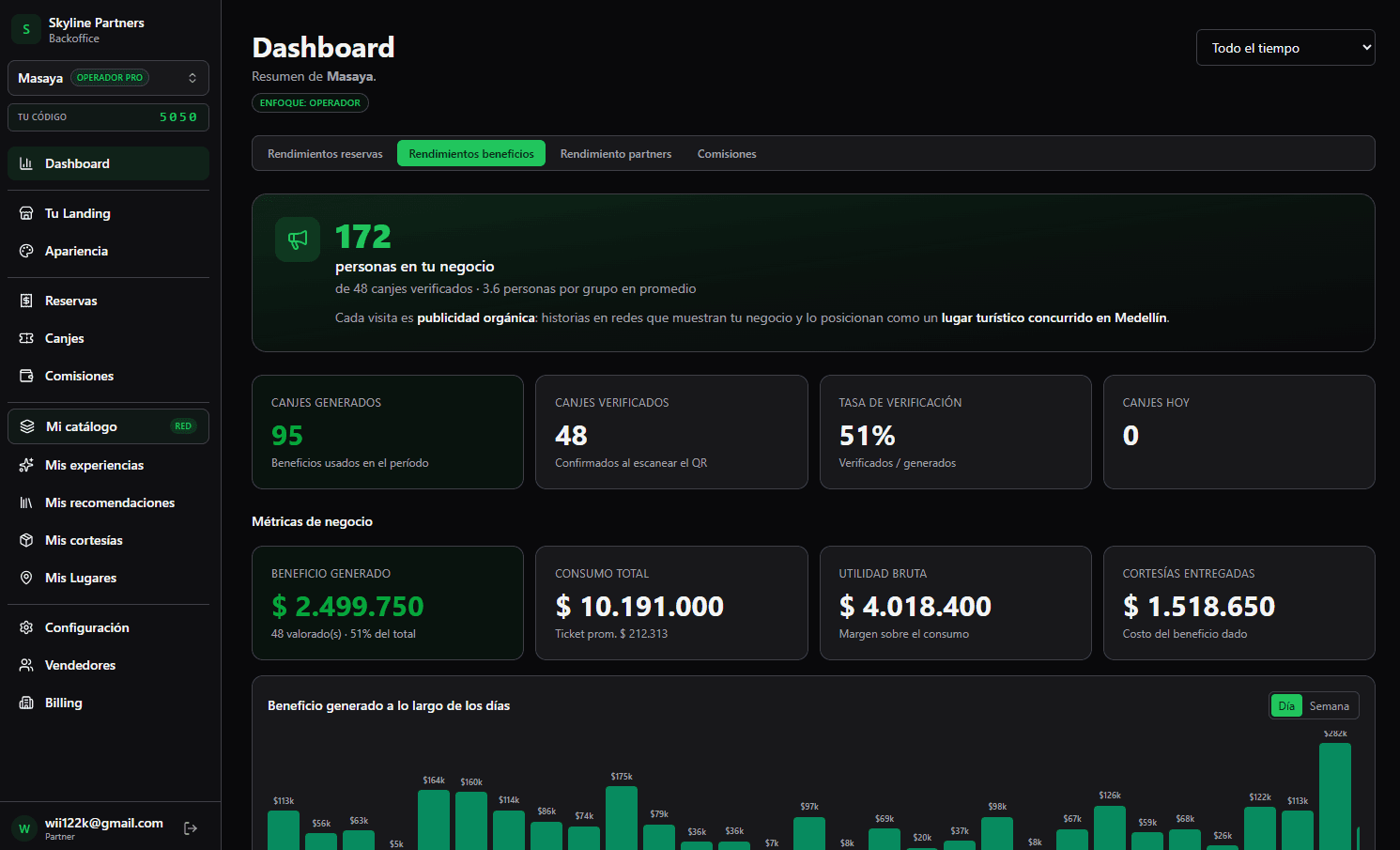
Related · Vórax
How a Restaurant Makes the Most of High Season with Courtesies
A visible courtesy (a drink, an entry or a discount) gets guides, hosts and creators recommending the restaurant.
ReadHow to Settle Redeemed Courtesies With Partners Monthly
Vórax attributes every redemption to the partner who originated it, no spreadsheets needed.
ReadBring New Customers to Your Restaurant Without Paying for Ads
You publish a courtesy (a drink, an entry, a discount) and the partner network and local creators recommend it.
Read