Terra · Skyline Blog
Agentic AI in Tours 2026: From Answering to Executing
Fabián Alvarez7 min read
TL;DR
- Agentic AI executes real actions (creating bookings, editing itineraries), not just answering questions.
- MCP is the standard that connects an AI assistant to the operator's software through defined permissions.
- The final price must always be calculated by the server from the catalog, never by the AI model.
- Every action the assistant takes must be traceable inside the same operations system the business uses.
- Terra connects this flow via MCP: the operator runs it by chat from Claude, ChatGPT or Gemini.
In 2026, agentic AI stops being a chatbot that only answers and starts executing actions inside the software: creating bookings, editing itineraries, checking availability. This requires the server to always calculate the price from the catalog, the assistant to have permissions defined per action, and every action to be traceable in the business's operations system.
From chatbots that answer to assistants that execute: what's happening
Until recently, AI in tourism was a chatbot that answered frequently asked questions. "Do you have a tour at 9am?" "How much is the city tour?" Useful, but limited: the chatbot talked, and a person did the real work afterward. Copy the answer, log into the system, create the booking by hand.
That's changing. Agentic AI doesn't just answer: it executes actions inside the operator's software. It creates a booking. It edits an itinerary. It checks real availability. The difference isn't cosmetic: it's the difference between an assistant that opines and one that operates.
Terra, Skyline's AI booking engine, is a concrete example of this shift. It connects to Claude, ChatGPT or Gemini via MCP (Model Context Protocol): the operator generates a URL in Terra → Integrations, pastes it into their assistant and operates by chat from there. It's no longer "ask the bot, then go do it yourself." It's "ask the assistant, and it's done."
A kayak operator in Guatapé could, in theory, message their connected assistant: "create a booking for two people tomorrow at 8am for the sunrise tour," and have that booking created, with its payment link, without anyone opening a dashboard. That's the leap 2026 brings: from conversation to execution.
What exactly is agentic AI in this context?
Agentic AI is an assistant that isn't limited to generating text: it uses tools to act on real systems, within defined permissions. In tourism, that means the assistant can read a catalog, create a booking, look up an itinerary or update it, always within the limits the operator defined.
The standard that makes this possible is called MCP (Model Context Protocol): an open standard that lets an AI assistant (such as Claude, ChatGPT or Gemini) connect to external tools and data through a server that exposes actions with defined permissions. It's not magic: it's a concrete list of things the assistant can and cannot do.
What actually changes for an operator in 2026?
Before, the operator had three separate systems: the chat with the customer, a spreadsheet or booking software, and their own memory to keep track of everything. Agentic AI collapses that into a single conversation. The operator doesn't switch screens: they ask, review, confirm.
This doesn't mean the operator loses control. It means control gets exercised differently: instead of clicking through every step, the operator defines what the assistant can do and reviews the outcome. The repetitive manual work (copying a name, looking up a date, calculating a price) gets handed to the machine. What's left for the person is deciding, not typing.
An example: an agency in Cartagena that gets bookings via WhatsApp all day. Before, someone on the team would read the chat, log into the system, create the booking, go back to the chat to confirm. With an assistant connected via MCP, that same flow gets resolved inside the conversation: the assistant checks the catalog, builds the booking and returns the payment link, all from the same chat thread.
What does this demand from the software underneath?
This is where many operators get it wrong when evaluating tools: they think "connecting an AI" to any system is enough. It isn't. Giving an AI assistant execution access requires three things a question-and-answer chatbot never needed.
Prices calculated server-side, never by the AI
A language model can make mistakes. It can confuse a rate, round incorrectly, mix up seasons. If the price shown to the customer comes from what the model "remembers" or "calculates" on the fly, the operator is exposed to costly errors and complaints.
In Terra, prices are computed server-side from the catalog; the AI cannot make up a price. The assistant can recommend, describe, suggest a package, but the final number always comes from the system, not the model. That separation—the AI proposes, the server calculates—is the difference between a tool you can operate with confidence and a risky experiment.
Any operator evaluating whether to connect an AI assistant to their operation should ask this question first: who calculates the price, the model or the system? If the answer is "the model," there's a risk that eventually gets paid for.
Defined permissions, not open access
Another requirement is that the assistant can only do what the server allows it to do, not one action more. A system that exposes well-defined actions keeps the AI from improvising on sensitive data: payments, availability, traveler information.
In Terra's case, the MCP exposes 11 tools: list experiences, create quickpay, list/get/create/update itineraries, get recommendations, create package, and list/get/update bookings. These are concrete actions, each with a name and a clear function. The assistant doesn't have generic access to "the entire database": it has a specific list of what it's allowed to do.
This matters because the operator needs to be able to explain to their team, and to themselves, exactly what the assistant can and cannot touch. Without that clear list, giving AI access to the operation is handing out keys without knowing how many doors they open.
Traceability: knowing what the AI did and when
The third requirement is being able to trace every action the assistant executed. If a booking was created via chat, the operator needs to see that booking in their operations calendar like any other, not as a loose record living somewhere else. Agentic AI is only trustworthy if its actions get integrated into the same system the rest of the team uses, visible and auditable.
This connects to something every operator should demand before connecting any assistant to their business: traceability isn't a luxury, it's the condition for sleeping well at night. Without it, there's no way to know whether an error came from the model, the operator, or bad data.
Is it worth it for a small operator?
The logical question is whether this only applies to large operators with technical teams. It doesn't. The whole point of MCP is the opposite: the operator doesn't need to write any code. Generate a URL, paste it into your preferred assistant (Claude, ChatGPT or Gemini), and start operating by chat. The technical complexity stays on the software side, not the operator's.
For an operator with a couple of guides and a tight schedule, this means resolving a booking without opening a dashboard, without searching a spreadsheet, without switching apps. For one with a bigger team, it means the repetitive work of logging bookings stops eating hours out of the day.
Table: chatbot that answers vs. assistant that executes
| Aspect | Chatbot that answers | Assistant that executes (agentic) |
|---|---|---|
| What it does | Answers frequently asked questions | Creates and modifies real bookings and itineraries |
| Where the work ends up | The person does it later, by hand | Done inside the same chat |
| Who calculates the price | Sometimes the model itself | The server, from the catalog |
| What it can touch | Nothing in the real system | Only the actions the server allows |
| Traceability | Doesn't apply, it doesn't execute anything | Every action gets integrated into the operations system |
What should an operator demand before connecting an AI to their business?
Three concrete questions, in this order. First, who calculates the price the customer sees? Second, what specific list of actions can the assistant execute, and who defined it? Third, do those actions show up in the same calendar or operations system the team already uses, or do they live separately?
If all three answers are clear, the operator is looking at a serious tool. If any answer is "I don't know" or "the model decides," it's worth asking more questions before giving it access to customer data and payments.
This is also the ground we cover in more detail in the full guide on how an AI booking works via MCP for tour operators AI Booking Engine for Tour Operators: Full Guide, where we walk through the connection step by step.
What to do next
If your operation still depends on copying bookings from a chat into a separate system, the first step is simple: go to Terra → Integrations, generate your MCP URL, and paste it into the AI assistant you already use (Claude, ChatGPT or Gemini). You don't need to switch tools, just connect the one you have.
Frequently asked questions
What is agentic AI applied to tours?
It's an AI assistant that doesn't just chat, but executes actions inside the operator's software: creating a booking, checking availability, or editing an itinerary. Unlike a traditional chatbot, the work gets done inside the conversation, not by hand afterward.
Is it safe to let an AI create bookings on my behalf?
It depends on how the underlying system is built. If the price is calculated server-side from the catalog instead of by the AI model, and the available actions are defined with clear permissions, the risk drops significantly compared to open access without rules.
Do I need to know how to code to connect my operation to an AI assistant?
No. With MCP, the operator generates a URL from the booking software, pastes it into their assistant (Claude, ChatGPT or Gemini) and starts operating by chat, without writing any code.
What's the difference between a rules-based chatbot and an agentic assistant?
A rules-based chatbot answers predefined questions and never touches the real system. An agentic assistant executes concrete actions (create, look up, update) inside the operations software, always limited to a list of permissions.
What happens if the AI makes a mistake creating a booking?
If the system separates responsibilities correctly, the price never comes out wrong because the server calculates it, not the model. And if every action gets logged in the same operations calendar, any error is visible and correctable right away.
Terra
See Terra in action
The AI booking engine for tour operators: bookings, itineraries, packages and payments, operated by chat via MCP.
Request a Terra demo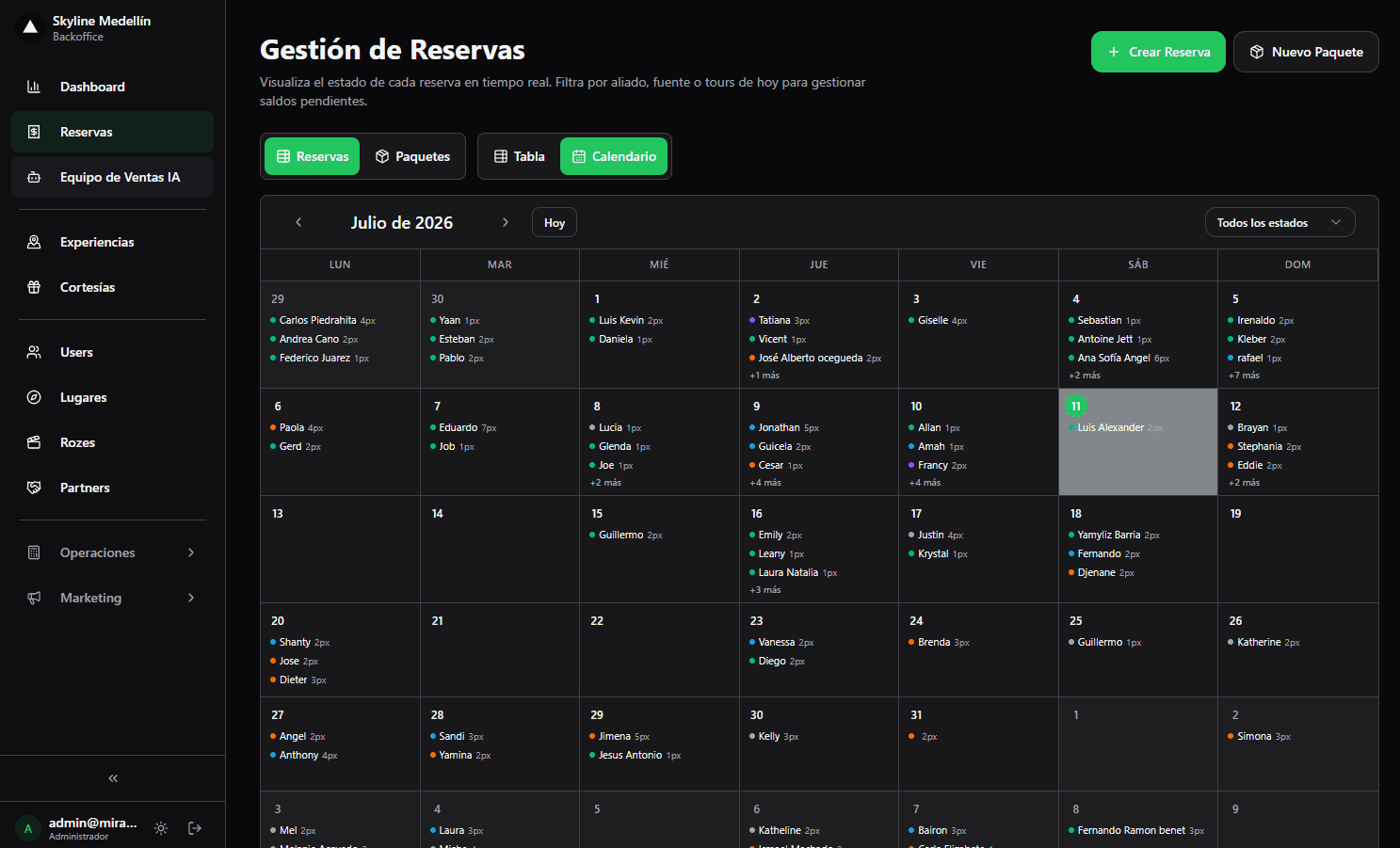
Related · Terra
How to Connect Your Booking Engine to Claude, Step by Step
Generate a URL in Terra → Integrations and paste it into Claude to connect your booking engine.
ReadBooking Software for a Kayak Operator with Several Guides
Terra puts bookings, guides, departures and payments in one multi-user calendar.
ReadHow to Build a 3-Day Itinerary by Chat With Real Prices
Terra builds day-by-day itineraries with a public link straight from a chat with the client.
Read