Vorax · Skyline Blog
Courtesy, Redemption & Statement: The Vórax Glossary
Fabián Alvarez6 min read
TL;DR
- A courtesy is the perk a venue publishes to attract new customers, delivered via QR.
- A redemption is the single, verified use of that courtesy, with no possibility of reuse.
- Verified spending records with an invoice what the customer spent beyond the courtesy.
- The statement automatically settles partners, with no spreadsheets and ready for WhatsApp.
In Vórax, a courtesy is the perk a venue publishes to attract customers (QR, single redemption); a redemption is its verified, non-repeatable use; verified spending records with an invoice what the customer spent afterward; and the statement automatically settles each partner, with no spreadsheets.
What does "courtesy" mean in Vórax?
A courtesy is a perk a venue offers (a drink, an entry, a discount) to attract new customers, delivered via QR and redeemed on site. This is the literal glossary definition from Skyline, and it's the starting point for everything that happens in Vórax, Skyline's tool for venues.
In practice, a courtesy is the public offer your restaurant makes available to the partner network and local creators. It's not a generic discount that anyone claims by messaging the venue's WhatsApp: it's a piece with rules, a defined format and traceability from the moment it's issued to the moment it's used.
Example. A restaurant in Provenza publishes "a complimentary welcome glass of wine" as a courtesy for anyone who arrives referred by the network. The courtesy becomes visible to partners (ambassadors, hosts, guides) and to verified local creators, who show it to their followers or recommend it directly to travelers.
What matters about the courtesy is that it turns a loose promotion into a measurable asset: every time someone recommends it, that gets recorded, and every time it gets redeemed, that gets recorded too. That's what later makes it possible to pay correct commissions and know which courtesy really brings in new customers and which doesn't.
What does "redemption" mean and how does it work in Vórax?
A redemption is the moment a customer presents their courtesy at the venue and it is marked as used, with no possibility of reuse. This is also the literal glossary definition, and it's the second piece of vocabulary every restaurant working with Vórax needs to master.
In Vórax, issuing, confirming and redeeming a courtesy are automatic: the traveler gets a QR, the venue scans it (with an optional 4-digit code as an extra verification step) and there is no double redemption. This means no one can present the same courtesy twice, claim it at two different venues, or hand it off to a friend to use after it's already been used.
Example. Following the welcome glass of wine: a traveler arrives at the restaurant with the QR she received when she confirmed her visit. The server scans the code from the venue's panel, optionally asks for the 4-digit code to confirm she's the one presenting it, and the system marks the courtesy as redeemed. If that same traveler (or anyone else) tries to use the same QR again, the system no longer allows it.
The redemption is also the event that triggers everything that follows: the count of people served, the spending record, and ultimately the commission calculation for whoever brought in that customer.
Why automatic redemption matters for a restaurant
Before having a system like this, many restaurants handle courtesies over WhatsApp or by word of mouth: someone arrives, says they were referred, and the server decides whether to believe them. That creates two typical problems: courtesies used more than once and no real data on how many people came through each partner.
Automatic redemption solves both. Because it's logged in the system and can't be repeated, the restaurant gets operational certainty. And because every redemption is tied to who originated it, the restaurant also gets commercial certainty: it knows exactly which partner or creator brought that table in.
What is verified spending and why isn't it the same as a free courtesy?
After redemption, the venue records people served and invoice-verified spending, and sees the benefit per courtesy. This is key for a restaurant, because the courtesy is almost never the real business: the business is what that person consumes in addition to the courtesy.
One thing is giving away a glass of wine. Another is knowing that, over recent months, that glass of wine brought in tables that then ordered an appetizer, a main course and dessert. Invoice-verified spending is exactly that second data point: not an estimate, not a "we think a lot of people came," but a record backed by an invoice of what was actually consumed.
Example. The Provenza restaurant mentioned above got 32 customers from 9 redemptions in a month thanks to courtesies published on Vórax. Each of those visits was logged with its verified spending, which let the owner see, courtesy by courtesy, whether the perk he was giving away translated into real sales or whether he was just handing out glasses of wine with no return.
This turns Vórax into a decision-making tool, not just a promotional one. A restaurant can adjust which courtesy it offers, which type of partner it shows it to more, or whether it's worth keeping, all based on real spending data instead of intuition.
What is the statement and how does settlement with partners work?
Settlement with partners in Vórax works without spreadsheets: the system generates a WhatsApp-ready statement and keeps a history of payments. This is what closes the cycle that started with the published courtesy and the logged redemption.
To understand why this matters, think about how it used to be done: a restaurant with several partners recommending its courtesies ended up tracking those accounts in a spreadsheet, cross-checking WhatsApp messages to confirm who brought in whom, and manually working out how much it owed each person. That's slow, and it's easy for a data point to get lost.
Example. The same Provenza restaurant, at month's end, doesn't have to open a spreadsheet or dig through scattered conversations. The system already knows, redemption by redemption, which partner originated each visit (because each referral shows who sent it), how much verified spending it generated, and how much that partner is owed according to the commission the venue set. With that, it builds the statement and sends it via WhatsApp to the partner, with the payment history already saved for the next settlement.
Summary table: the Vórax vocabulary from start to finish
| Term | What it is | Where it appears in the process |
|---|---|---|
| Courtesy | Perk the venue publishes to attract new customers | Start: the venue creates it and the network recommends it |
| Redemption | Single use of the courtesy, verified with a QR | Moment the customer arrives at the venue |
| Verified spending | Invoice-backed record of what the customer spent | After redemption, inside the venue's panel |
| Statement | Automatic settlement with the partner who originated the visit | End of cycle, ready to send via WhatsApp |
For a restaurant, rooftop or club, this vocabulary isn't just theory: it's the full flow of how a new customer comes in, how it's verified that they actually arrived and spent, and how whoever brought them gets paid, without relying on spreadsheets or memory.
If your venue still handles courtesies over WhatsApp or spreadsheets, the next step is to publish your first courtesy on Vórax and let the redemption, verified spending and statement register themselves from the first visit.
More about Vorax: vorax.skyln.co
Frequently asked questions
Is a courtesy in Vórax always free for the venue?
The courtesy is free for the traveler who redeems it, but not necessarily for the venue: Vórax is free to start and the venue only pays per courtesy actually redeemed, not for publishing it.
What happens if someone tries to use the same courtesy twice?
The system prevents it: issuing, confirmation and redemption are automatic via QR, and a redeemed courtesy is marked as used with no possibility of reuse.
How do I know who brought me each customer who redeemed a courtesy?
Each referral shows who sent it, so the venue sees a ranking of partners by people served and spending, and can verify the origin of every visit.
Do I need to keep a spreadsheet to pay my partners?
No. Settlement with partners in Vórax happens without spreadsheets: the system generates a statement ready to send via WhatsApp and keeps a history of payments.
Does verified spending only include the cost of the courtesy?
No, it includes everything the customer consumed during that visit, recorded with an invoice, which lets the venue see the real benefit of each courtesy beyond what was given away.
Vorax
See Vorax in action
New customers for restaurants, rooftops and clubs: verified-redemption perks recommended by the partner network.
Get started with Vorax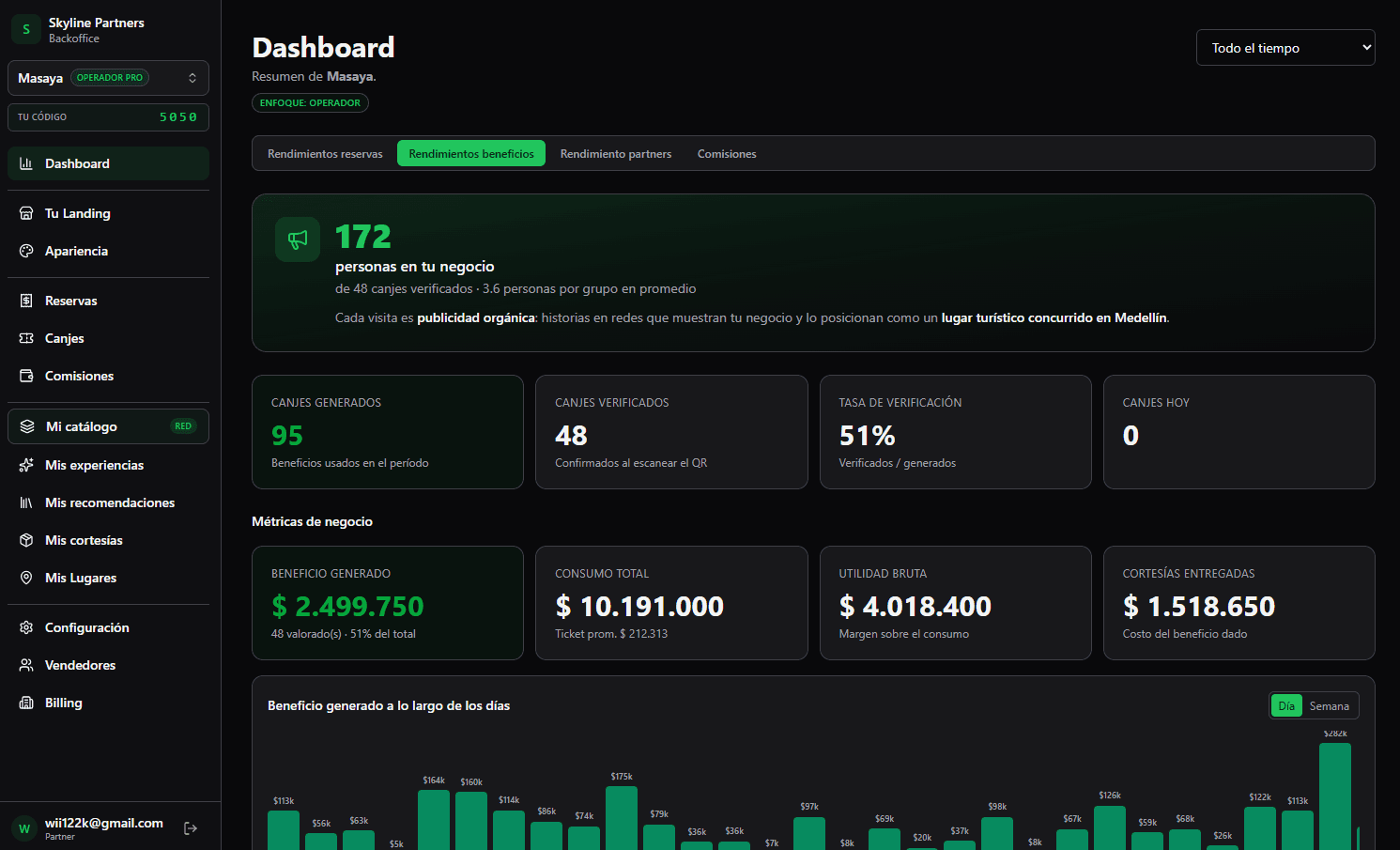
Related · Vorax
How Do I Measure If a Courtesy Was Profitable?
A redemption only proves the courtesy was used, not that it was profitable.
ReadHow to Prevent Double Redemptions and Fraud with Courtesies
Each courtesy QR is single-use and gets blocked automatically after the first redemption.
ReadHow a Restaurant Makes the Most of High Season with Courtesies
A visible courtesy (a drink, an entry or a discount) gets guides, hosts and creators recommending the restaurant.
Read