Luxor · Skyline Blog
How a Boutique Hotel Turns Its Front Desk Into Sellers
Fabián Alvarez6 min read
TL;DR
- Each front-desk person can have their own sales link under the hotel's root account.
- A lobby QR leads to the experiences page without anyone having to explain anything.
- The earnings panel shows in real time which bookings and commissions each person generated.
- The ambassador role is free and ready in minutes.
- Visible commission motivates more than any promise at the end of the month.
A boutique hotel opens a root account as an ambassador in Luxor and creates a seller with their own URL for each front-desk person. Each one shares their link or a lobby QR, and sees in their panel the bookings and commissions they generated. The verbal recommendation becomes an attributed, measurable sale.
Why turn the front desk into a sales channel?
A boutique hotel lives off moments of human contact: check-in, the question about what to do in the city, the "any recommendations for this afternoon?" that every guest asks at some point during their stay. Today, that moment almost always ends in a verbal recommendation that leaves no trace, generates no income, and can't be measured. With Luxor, Skyline's ambassador program, that same moment turns into an attributed, commissioned sale.
The underlying idea is simple: the hotel doesn't need to hire an experience sales team. It already has one. It's called the front desk, the concierge, the bellhop, the person doing check-out. Each of them can have their own sales link, their own QR and their own commission panel, all under the hotel's account.
The case: a boutique hotel with three front-desk staff
Picture a twelve-room boutique hotel with three people rotating at the front desk: Mariana on the morning shift, Esteban in the afternoon and Juliana at night. The hotel decides to open a root account as an ambassador in Luxor and give each front-desk person a seller with their own URL under that account.
Step 1: the hotel's root account
The hotel signs up as an ambassador and gets its own page with verified experiences from the network: tours, transfers, courtesies from nearby restaurants and rooftops. This page is the foundation: the hotel decides which experiences appear, in what order, and how the page looks.
Step 2: one seller per front-desk person
An ambassador can have sellers with their own URL under their account, so the hotel creates three sellers: one for Mariana, one for Esteban, one for Juliana. Each front-desk person has their own link, different from the hotel's, though it shows the same catalog of verified experiences. When Mariana recommends the sunset cable car tour to a guest, she shares her personal link, not the hotel's generic one.
This changes the conversation at the counter. It's no longer "ask the front desk what to do," it's "Mariana recommends this," with her name on it. The recommendation stops being anonymous and becomes personal, which in boutique tourism matters as much as the service itself.
Step 3: a QR in the lobby
Not every guest gets the link in a chat. Many walk past the lobby, glance at the welcome board or the in-room services folder on the desk. That's where the QR comes in: ambassadors share via link or QR, and physical QRs track scans. The hotel prints a large QR in the lobby with the week's featured experiences, and each front-desk person can also have their own QR at their station.
A guest who scans the lobby QR while waiting for the elevator lands on the verified experiences page without anyone having to say a word. The hotel sees how many scans that particular QR got, which tells it whether it's worth moving it or redesigning it.
Step 4: commissions visible to everyone
Here's the point that really motivates a front-desk team to sell: the commission isn't a promise for the end of the month, it's visible in real time. The ambassador has a real-time earnings panel with attributed bookings and commissions per booking and per courtesy. The hotel, as the root account, sees the total; each front-desk person, from their own seller, sees what they generated with their own link.
Esteban, who works the afternoon shift when guests come back from the pool and start thinking about the evening, checks his panel at the end of his shift and sees how many bookings came from his link that day. He doesn't depend on the manager confirming anything: the number is already there, attributed to his name, with the commission calculated.
This solves a classic problem for boutique hotels: motivating a small team without setting up a manual commission scheme in a spreadsheet that nobody updates. The panel does that work on its own.
What does the hotel need to get started?
It doesn't need to renegotiate contracts with operators or build a new website. It needs three things:
- A root account as an ambassador with its catalog of verified experiences already loaded.
- A seller per team member who is in contact with guests: front desk, concierge, even housekeeping if they interact with travelers.
- A physical QR visible at the points where guests have idle time: lobby, elevator, room.
The ambassador role is free, and the link or QR is ready in minutes, so the hotel can have its account and all three sellers running the same day it decides to try this.
What changes for the guest?
For the guest, nothing feels forced. They don't get a generic tourism catalog: they get a recommendation from the person who already took care of them, with experiences that exist and have real prices because they come from the network's verified catalog. The guest books from that link, pays if applicable, and the booking is recorded under the name of whoever referred it.
This also works for courtesies at restaurants and partner venues: if the hotel has an informal agreement with a nearby rooftop, the front-desk person can recommend the courtesy from the same link and also earn a commission on that spending when the traveler redeems it.
Comparison table: verbal recommendation vs. seller with their own URL
| Traditional verbal recommendation | Seller with their own URL in Luxor | |
|---|---|---|
| Attribution | None, it's unclear who made it | Every booking is recorded under the front-desk person's name |
| Commission | Depends on manual agreements or doesn't exist | Visible in real time in the earnings panel |
| Measurement | No way to know what worked | QR and links show scans and bookings |
| Setup effort | None, but no return either | Account ready in minutes, free to start |
| Guest experience | Depends on the front-desk person's memory | Verified catalog with real prices, through a personal link |
Where to start if the hotel has never sold experiences before
The simplest approach is to start with one person on the busiest shift, usually the afternoon, and a single QR in the lobby. Once that person sees their first commission reflected in the panel, the rest of the team usually asks for their own seller without the manager having to push for it. This kind of incentive works better when it's seen, not when it's promised.
It's worth noting that this strategy fits within a broader approach to how hosts turn recommendations into income, which we cover in more detail in Host's Guide: Turn Your Recommendations Into Income.
What to do next
If the hotel already has a front-desk team that recommends experiences by word of mouth, the next step is to create the root account as an ambassador in Luxor and set up a seller per person this same week, before printing the first lobby QR.
Frequently asked questions
Does the hotel need a separate account for each front-desk person?
No. The hotel opens a single root account as an ambassador and from there creates a seller with their own URL for each team member. Everyone shares the same catalog of verified experiences, but each link is attributed to whoever shares it.
How much does it cost to start with Luxor?
The ambassador role is free, and the link or QR is ready in minutes. The hotel can have its root account and each front-desk person's seller running the same day.
How does each front-desk person know how much they generated?
Each seller has access to a real-time earnings panel with bookings attributed to their link and commissions for every booking or redeemed courtesy. It doesn't depend on anyone confirming it manually.
Does this work only for tours or also for nearby restaurants?
It works for both. The seller also earns a commission on spending at restaurants and partner venues when the traveler redeems a recommended courtesy, not just on experience bookings.
Does the lobby QR replace each front-desk person's personal link?
No, they're complementary. The lobby QR captures guests who pass by without direct interaction, while the front-desk person's personal link is shared during the check-in conversation or throughout the stay.
Luxor
See Luxor in action
The ambassador program: hosts, guides and creators earn commission for recommending experiences from their own page.
Get started with Luxor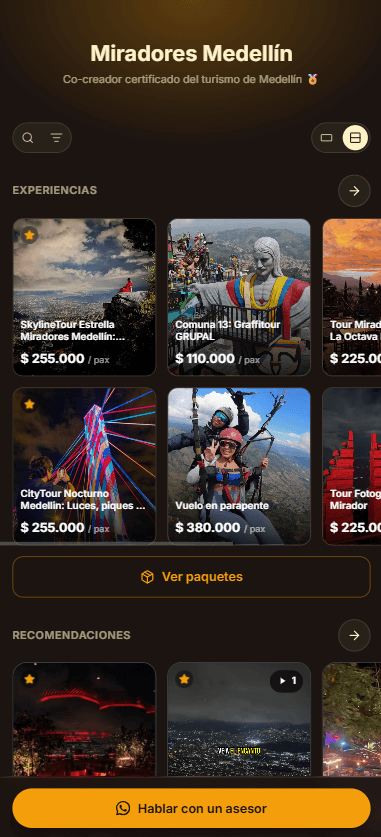
Related · Luxor
Which Experiences to Show Each Type of Guest
Your ambassador page can be reordered and have highlights adjusted based on who's arriving: couple, family, business or group.
ReadWhat Is a Referred-Spending Commission at Restaurants?
A referred-spending commission is paid when a traveler redeems a courtesy at a partner venue and spends there.
ReadHow to Place a Recommendations QR at a Hotel Front Desk
Generate your QR from your ambassador page and place it at the counter, next to check-in.
Read