Vórax · Skyline Blog
How to Take Prior Bookings for Courtesy Guests
Fabián Alvarez7 min read
TL;DR
- The traveler leaves their WhatsApp and the day they plan to visit the restaurant when claiming the courtesy.
- The venue confirms the booking from its Vórax panel, without chasing the conversation.
- The confirmation notice arrives automatically by email and WhatsApp to both sides.
- On the day of the visit, redemption happens with a QR code (and an optional 4-digit code), with no possibility of repeating it.
To take prior bookings with a courtesy, turn on that option in your Vórax courtesy: the traveler leaves their WhatsApp and the day they plan to go, you confirm from the panel, both sides get notified by email and WhatsApp, and on the day of the visit you redeem their QR at the venue, with no double redemption possible.
What is a courtesy with prior booking?
A courtesy with prior booking is a feature of Vórax, Skyline's tool for venues, that lets a restaurant know who is coming and when, before the person shows up at the door with their courtesy. The traveler leaves their WhatsApp and the day they plan to visit, and the venue confirms that booking from its panel, without chasing the conversation.
This solves a specific problem: when a courtesy is handed out with no control, the restaurant has no idea how many people will show up or on which day, and ends up improvising tables or falling short on a service it actually expected to be busy. With prior booking, the venue decides in advance whether it has room that day and at what time.
Here's an example: a seafood restaurant downtown publishes a courtesy for a free starter with the purchase of two main dishes. A traveler sees it recommended by an ambassador in the network, leaves their WhatsApp, and picks Saturday night. The restaurant sees the request in its panel, checks that Saturday has open tables, and confirms. The traveler gets notified and arrives that night knowing they're expected.
How does the full flow work, step by step?
The flow has four moments: the traveler's request, the venue's confirmation, the automatic notification, and the redemption on the day of the visit.
Step 1: The traveler leaves WhatsApp and a day
When someone finds the restaurant's courtesy (through an ambassador in the network, a local creator, or directly in the app), the courtesy can require the person to leave their WhatsApp number and the day they plan to go. This turns a loose courtesy into a prior booking with concrete data.
Step 2: The venue confirms from its panel
The restaurant logs into its Vórax panel and sees pending requests. There, it decides whether to confirm the booking for that day or suggest adjusting the date based on occupancy. The confirmation gets recorded, and from that moment the booking is active.
Step 3: Automatic notification by email and WhatsApp
Once confirmed, both the venue and the traveler get notified: the venue sees the booking reflected in its daily operations, and the traveler gets a notification that their courtesy is confirmed for the chosen day. Nobody has to write manually to give a heads-up.
Step 4: Redemption with QR on the day of the visit
On the agreed day, the traveler arrives at the restaurant with the QR code for their courtesy. The venue scans it (with an optional 4-digit code as backup if the scan fails), and the system marks the redemption instantly, with no possibility of repeating it. This same mechanism of automatic issuing, confirmation and redemption is what Vórax uses for any courtesy, with or without prior booking: what changes here is that the restaurant already knew that person was coming.
Why is booking ahead better than leaving the courtesy open?
The difference is predictability. An open courtesy (without prior booking) works for a venue that has spare capacity almost every day and just wants more foot traffic. A courtesy with prior booking works for a restaurant that needs to organize its service: how many tables to set aside, whether it needs an extra server that shift, or whether a specific day is already full and it would rather not add more courtesies.
| Aspect | Manual coordination (loose WhatsApp or spreadsheets) | Courtesy with prior booking in Vórax |
|---|---|---|
| Who gives notice someone is coming | Nobody, or it depends on the customer writing on their own | The traveler leaves WhatsApp and a day when taking the courtesy |
| How the venue confirms | Loose messages, easy to lose in the inbox | Confirmation from the panel, in one place |
| Notice to the customer | Manual, if someone remembers to reply | Automatic by email and WhatsApp |
| Risk of double redemption or fraud | High, depends on memory or scattered notes | Low: QR with single redemption, optional 4-digit code |
| Visibility into who's coming each day | None until the person shows up | The venue sees confirmed bookings in advance |
A restaurant that's just starting to receive courtesies can survive with manual coordination for a while. But as the number of requests grows, every loose message is a chance to lose control of table space, drink inventory, or the busiest hour of the night.
What does the restaurant need to set up to activate it?
No separate system or new staff is needed. The restaurant needs three things inside Vórax:
- Publish the courtesy: define what it offers (a drink, an entry, a discount) and turn on the prior-booking option for that specific courtesy.
- Check the panel regularly: someone on the team should log in to confirm or adjust incoming requests, ideally every day.
- Have the scanning process ready at the door or the register: whoever greets customers should know there's a QR to scan and, if applicable, a 4-digit code as backup.
No extensive training is needed. The waitstaff or host at the entrance only needs to know there's a list of confirmed bookings and that redemption happens with the customer's QR.
What happens if the restaurant has no room that day?
Here's the honest part: prior booking doesn't create tables out of thin air. If the restaurant checks the panel and sees a day is already full, the natural move is to not confirm that request or offer the traveler another available day. The tool gives visibility to decide in time, but the decision to accept or not still belongs to the venue.
This is different from a courtesy without prior booking, where the traveler simply shows up and the restaurant improvises on the spot. With prior booking, "I have no room today" gets resolved before the person leaves their hotel, not once they're already standing at the door.
What does the restaurant gain compared to a courtesy without booking?
Three concrete things:
- Fewer surprises during service: it knows in advance how many people with a courtesy will arrive and on which day.
- Less friction with the customer: the traveler arrives knowing they're expected, not wondering whether the restaurant will honor their courtesy.
- Less manual coordination work: notifications go out automatically, without someone on the team having to write confirmation messages one by one.
A different example: a rooftop club publishes a free-entry courtesy for groups arriving before 11 pm. Without prior booking, the door team has no idea how many people will show up that Saturday. With prior booking, they already know how many courtesies are confirmed for that night and can plan the entry flow.
How is this different from just sharing a WhatsApp number?
Sharing a loose WhatsApp number to "book" depends on someone at the restaurant checking that conversation in real time, understanding which courtesy applies, and replying before the customer loses interest or forgets. It's a fragile process: if the person handling WhatsApp is busy during the lunch rush, the request can get lost.
Prior booking inside Vórax doesn't depend on someone monitoring the chat in real time. The request stays saved in the panel, with the day the traveler chose, and the restaurant reviews it whenever it has a moment, without the risk of it getting buried among other conversations.
What to do next
If your restaurant already has an active courtesy in Vórax, log into the panel and turn on the prior-booking option for that courtesy. If you don't have a courtesy published yet, first define what you'll offer (a drink, an entry, a discount) and activate it with prior booking from the start, so every request arrives with WhatsApp and a day already set.
Frequently asked questions
What happens if the traveler doesn't show up on the day they booked?
A confirmed booking doesn't obligate the venue to hold the table indefinitely; redemption is only marked when the person presents the QR on site. If they don't arrive that day, the restaurant can coordinate with the traveler via WhatsApp to adjust the date.
Does prior booking have any extra cost?
Prior booking is part of the same courtesy you publish in Vórax; you only pay per redeemed courtesy, not for turning on this feature.
Can I require prior booking on some courtesies and not others?
Yes, each courtesy is configured separately, so you can have an open courtesy for low-occupancy days and another with prior booking for days when you need to control the flow.
What happens if the QR code doesn't scan well at the venue?
That's what the optional 4-digit code is for, serving as a backup at redemption time without depending solely on the phone's camera.
Who at the restaurant should handle confirming bookings?
It can be whoever already manages the Vórax panel or whoever is in charge of reservations; the important part is checking it regularly so requests don't pile up unanswered.
Vórax
See Vórax in action
New customers for restaurants, rooftops and clubs: verified-redemption perks recommended by the partner network.
Get started with Vórax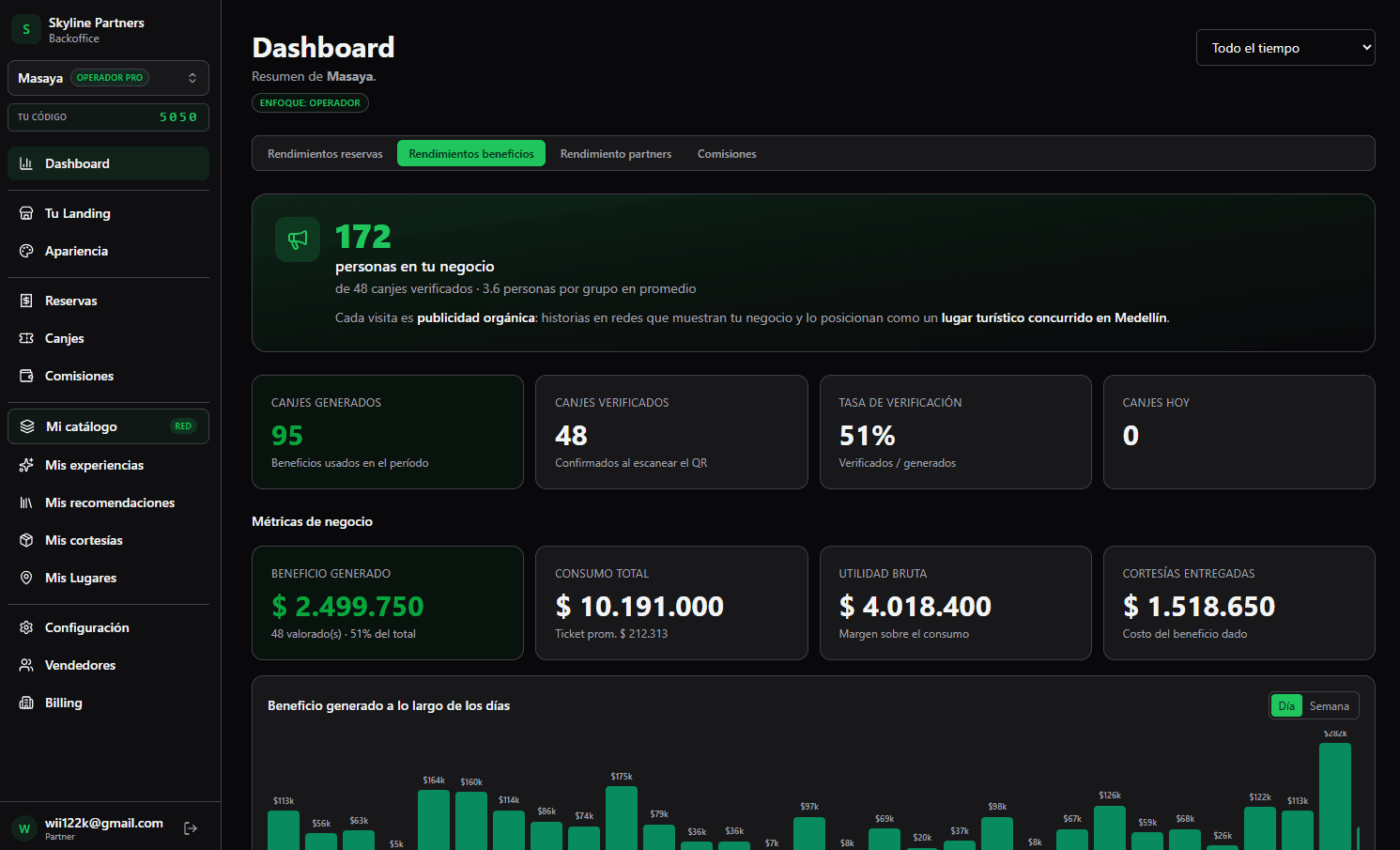
Related · Vórax
Verified-Redemption Courtesies vs Discount Coupon Apps
A generic coupon doesn't say who brought the customer; a verified-redemption courtesy does.
ReadHow to Set the Commission You Pay Your Referral Partners
The venue sets the commission, not a fixed rate imposed from outside.
ReadHow to Fill a Rooftop Bar on Weekdays With Courtesies
Publish a drink courtesy only for the slow nights and the partner network recommends it.
Read