Terra · Skyline Blog
Partial Payments and Chat Confirmation: Where Tour Payments Go
Fabián Alvarez6 min read
TL;DR
- Inbound tourism buys in minutes, inside chat, not through web forms built for weeks-ahead planning.
- A deposit lowers the decision barrier compared to demanding full payment upfront.
- When the operator doesn't collect online, the booking is confirmed via WhatsApp with the same link, without duplicating the flow.
- Tourism software needs to support both confirmation paths at once, not pick just one.
Tour payment collection is shifting from web forms to chat because inbound travelers decide in minutes, inside the same conversation. A deposit confirms the booking without demanding full payment upfront, and when there's no online payment, confirmation happens via WhatsApp with the same link, without switching channels or flows.
The web form lost the race: tour payments now live in chat
For years the standard flow looked the same across almost any inbound tour operator: the traveler writes on WhatsApp or Instagram, someone on the team sends a link to a web form, the traveler abandons the tab, forgets to finish, writes again asking "is it confirmed yet?", and the operator chases the payment for days. That form, built for outbound travel where people buy weeks in advance from a desktop, doesn't match how a traveler in Cartagena, Medellín or San Andrés actually books today: deciding tomorrow's plan from their phone, inside the same conversation where they're already talking to the operator.
The trend is clear and it isn't a fad: payment collection is moving into chat, powered by two pieces that make it possible: the partial payment (deposit) and a payment link generated inside the same conversation, with no detour to an external form. This piece explains why this shift is happening in inbound tourism, what it breaks about the web-form model, and what an operator's software needs to support to keep up.
Why does inbound tourism buy differently than outbound?
Because the decision happens close to the tour date and almost always inside a conversation that's already underway. A traveler who arrived yesterday isn't comparing quotes across browser tabs: they're in the hotel's chat, in the WhatsApp group with the guide someone recommended, or replying to an Instagram ad. If at that moment the operator sends a link to a long form (name, ID, date, number of people, payment method, email confirmation), it introduces friction exactly where the traveler wants to resolve things fast and move on with their day.
The web form works fine when the buyer plans ahead and is willing to spend minutes on a structured process. In inbound tourism, every extra step is a chance to lose the booking. A kayak operator in Guatapé fielding inquiries at 8pm for a 7am departure the next morning can't afford to let the traveler get lost between tabs: the booking needs to close inside the same thread where the conversation is happening.
What does the chat link actually break compared to the form?
Three things, in this order:
- It cuts the steps between the question and the payment. The traveler asks, gets a link, pays. No jump to another platform, no prior sign-up.
- It keeps the context of the conversation. If something fails or there's a question, everything stays in the same thread, not in a confirmation email that gets lost in spam.
- It allows closing with a deposit instead of demanding full payment. This is the key part: asking for 100% upfront from someone who decided twenty minutes ago is asking for too much trust at once. Asking for a reasonable portion and leaving the rest for later lowers the barrier without losing the confirmation.
This is where Terra, Skyline's AI booking engine, comes in. Terra has online payments with its own checkout, with a 30% deposit option and balance paid later. That means the operator doesn't have to choose between "all or nothing": they can confirm the spot with a fraction of the value and collect the rest later, without the traveler feeling like they're committing their entire budget in a chat message to someone they just met.
What happens if the operator doesn't want (or can't) collect payment online?
This is the part most "digital payments" analyses skip, and it's exactly where real inbound tourism differs from the theory: not every operator uses online payments yet, and it isn't always an option available in the moment. Partners who collect cash on arrival, operators who work with direct transfers, or simply travelers who prefer to pay at destination.
Tourism software can't assume online payment is the only valid path. When the operator doesn't use online payments, the booking is confirmed via WhatsApp with the same link. This matters because it keeps the same conversation flow and the same link as the reference point, without forcing the operator to set up a payment gateway they might not need yet, or forcing the traveler into a different process depending on the payment method. The link isn't just a collector: it's the confirmation point, whether payment happens online or not.
An agency in Cartagena serving cruise passengers with only a few hours on land illustrates the point well: part of its customers pay by card from the chat, and another part prefers to confirm and pay cash when boarding the tour. If the system demanded a single path, the agency would lose bookings on one side or the other. The software has to support both paths without duplicating work.
What should software support to move past the web form?
Based on where payment collection is heading in inbound tourism, here's the minimum an operator should demand from their platform:
| Operator need | Why it matters in inbound tourism |
|---|---|
| Generate a payment link from the same conversation | Avoids pulling the traveler out of the chat where they already decided to buy |
| Offer a deposit instead of full payment | Lowers the decision barrier for last-minute purchases |
| Confirm without online payment when it applies | Supports operators and travelers who prefer cash or transfer |
| Keep the same link for booking and confirming | Avoids travelers getting two different links and getting confused |
| Not depend on a long form | Reduces abandonment in decisions made in minutes |
A traditional booking engine built for outbound tourism usually handles full payment through a form well, but it isn't designed for this duality: chat as the main channel, deposit as the entry point, and WhatsApp confirmation as a backup when online payment doesn't apply. That combination is what defines tour payment collection in inbound tourism today, and it's different from what a spreadsheet or a rule-based chatbot can solve, since neither can generate a contextual payment link nor support two confirmation paths at once.
Where is this trend heading?
Tour payment collection isn't going back to the long form. It will keep moving closer to where the conversation happens: chat. That means an operator's software needs to treat payment as a natural extension of the conversation, not a detour to another tool. The deposit stops being an exception and becomes the default for last-minute bookings, and WhatsApp confirmation stops being a patch and becomes a legitimate, permanent path, not one that only exists "while online payment gets integrated."
This analysis belongs to the broader topic of payments, deposits and payment links for operators. If you want to understand how to structure your entire payment operation, from quickpay to settling each departure, check out How to Charge Tour Bookings Online: Deposits & Links.
What to do next
If your operation still sends travelers to a web form separate from the chat, the first concrete step is simple: try generating your next payment link inside the same conversation where they're asking you, with the deposit option turned on, and compare how many bookings close the same day versus how many get lost in the tab switch.
Frequently asked questions
Why does the web form work worse for inbound tourism than outbound?
Outbound travel plans weeks ahead and tolerates a structured process, while inbound travelers decide in minutes inside a conversation that's already underway. Every extra step outside chat is a chance to lose the booking.
What does an operator gain by offering a deposit instead of full payment?
It lowers the decision barrier for last-minute bookings, since the traveler confirms with a fraction of the value instead of committing the whole budget at once. The balance gets paid later.
What happens if an operator doesn't use online payments?
The booking still gets confirmed via WhatsApp with the same link that would have been used to pay. This supports operators who work with cash or transfers without forcing them to set up a payment gateway.
Does the payment link fully replace the web form?
It replaces the step of pulling the traveler out of chat into another platform. The link is generated inside the same conversation and works both for paying online and as the confirmation reference.
What should booking software support to follow this trend?
It should generate payment links from chat, allow a deposit instead of full payment, and confirm bookings via WhatsApp when online payment doesn't apply, all without duplicating the operator's work.
Terra
See Terra in action
The AI booking engine for tour operators: bookings, itineraries, packages and payments, operated by chat via MCP.
Request a Terra demo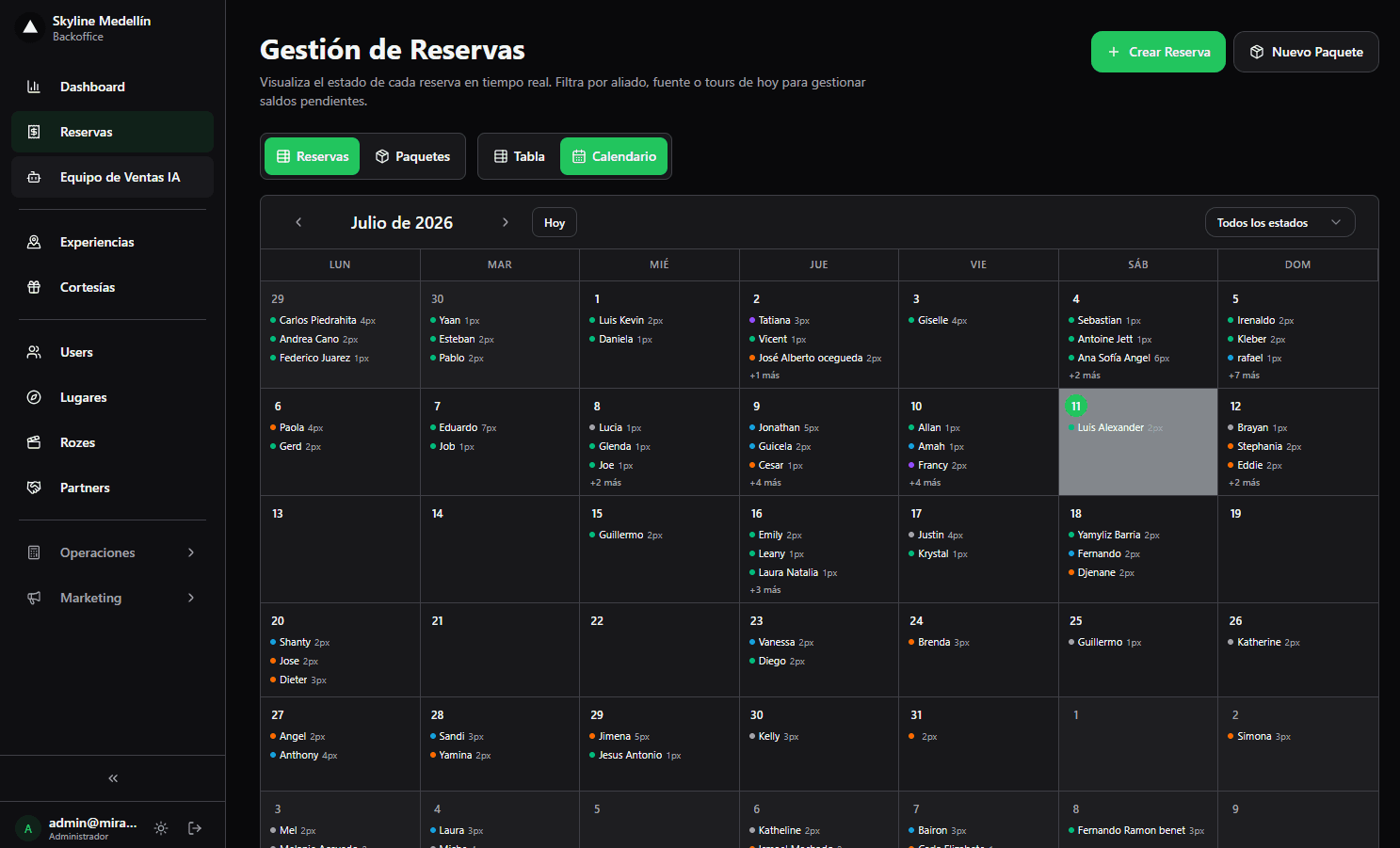
Related · Terra
How to Settle a Tour Departure Without Spreadsheets
Departure settlement is the cash close of a tour: income, guide expenses, commissions and what remains for the operator.
ReadSoftware for a Daily-Departure Guatapé Tour Operator
Terra brings bookings, guides, departures, travelers and payments into one multi-user calendar.
ReadWhat Is a Deposit in a Tour Booking?
A deposit is a partial payment that confirms the booking; the balance is paid later.
Read