Terra · Skyline Blog
What Is a Deposit in a Tour Booking?
Fabián Alvarez5 min read
TL;DR
- A deposit is a partial payment that confirms the booking; the balance is paid later.
- A 30% deposit is a middle point: it commits the traveler without slowing down the purchase.
- Terra offers its own checkout with a 30% deposit and balance paid later.
- Without online payments, the booking is confirmed via WhatsApp with the same link.
- Each operator sets and communicates their own cancellation policy for the deposit.
A deposit is a partial payment that confirms the booking; the balance is paid later. In practice it works as a commitment signal: the traveler secures their spot by paying part of the price, and the operator can plan the departure with certainty. Terra offers this scheme with a 30% deposit inside its own checkout.
What is a deposit in a tour booking?
A deposit is a partial payment that confirms the booking; the balance is paid later. That's the full definition and there's no trick to it: the traveler doesn't pay the full amount of the tour the day they decide to buy, they pay a part to secure their spot and settle the rest later, usually close to the departure date.
For a tour operator, this isn't a minor bookkeeping detail. It's the difference between a booking that holds and a booking that falls apart over chat three days before departure because the traveler "was still thinking about it" and never put money behind it. The deposit is the point where purchase intent turns into a commitment backed by real money.
The definition, in an operator's day-to-day
Think of a kayak operator who gets a handful of inquiries a day about the weekend departure. Without a deposit, each inquiry stays a maybe until the traveler actually shows up or doesn't. With a deposit, each person who pays the initial part stops being a maybe and becomes part of the real departure list. The operator can plan vehicles, gear, guides and meals against numbers that exist, not against chat promises.
That's what Terra, Skyline's AI booking engine, solves when it handles payments: online payments with its own checkout, with a 30% deposit option and balance paid later. The operator doesn't have to manually decide how much to charge upfront in every conversation or chase the rest on their own: the system already brings that scheme built in.
Why 30% and not another number?
The 30% deposit works because it sits at a middle point that almost no traveler rejects, yet it does create commitment. Asking for full payment upfront slows down the buying decision: many people prefer to wait, compare, hesitate. A deposit that's too small, on the other hand, doesn't create real commitment; it's low enough that losing it doesn't hurt anyone, so last-minute cancellations keep happening anyway.
30% sits in that middle ground: it's enough money that the traveler feels they've already made a decision, and enough commitment that the operator can trust that person will actually show up on tour day. It isn't an arbitrary figure — it's what Terra brings configured as an option inside its own checkout, along with the balance paid later.
A simple example: an agency in Cartagena selling a day trip to the Rosario Islands charges the 30% deposit at the time of booking and leaves the balance to be paid on the day of departure or a few days before. The traveler has already planned their budget knowing the spot is secured, and the agency already knows how many lunches and boat seats to confirm, instead of relying on a list of "interested people" that never turns into a list of "confirmed people."
What problem does the deposit actually solve
- Reduces silent no-shows: someone who has already put money down has a real reason to show up.
- Gives operational certainty early: the operator can book transport, guides and equipment in advance, without waiting for full payment.
- Makes the traveler's decision easier: paying a part is a lower barrier than paying everything, so there's less drop-off at the moment of booking.
- Organizes cash flow: the operator receives income from the moment of booking, not only on tour day.
What happens with the balance?
The balance is the part of the payment left pending after the deposit, and it's paid later, generally before or on the day of departure. In the scheme of online payments with its own checkout, with a 30% deposit option and balance paid later, that remaining amount is part of the same booking created at the time of the deposit.
This matters because the balance is exactly the moment where bookings get lost most often when everything is handled by hand. An operator running their collections on spreadsheets or in the team's memory ends up with travelers arriving on tour day without having paid the rest, or guides collecting cash on site with no clear record of what was owed. A deposit scheme, built into a booking engine, keeps a clear record: what was paid first, and when the deposit was made.
What if the operator doesn't use online payments?
Not every operator is ready to charge online from day one, and that's fine. When the operator doesn't use online payments, the booking is confirmed via WhatsApp with the same link, so the deposit scheme doesn't depend on having checkout active to work as a confirmation concept: the operator can keep using the logic of "a part confirms, the rest is paid later," except confirmation happens through conversation instead of automatic charge.
This gives flexibility to a small operator who's just formalizing how they collect payment: they can start confirming bookings via WhatsApp and move to charging the deposit online once their volume justifies it, without changing how they organize their departures.
What happens with cancellations?
Here it's worth being straightforward: this isn't something a booking engine decides on its own. The cancellation and refund policy for a deposit is a commercial decision that belongs to each operator, based on their own terms. What the deposit does solve, as a mechanism, is reduce how often last-minute cancellations happen with no prior commitment, because there was already a real payment in place before the tour date. The policy on what happens if a traveler cancels after paying that deposit — whether it's refunded, kept as credit, or subject to a deadline — is something each operator needs to set and communicate clearly to their customers from the moment of booking.
What to do with this in your operation
If you currently charge full payment upfront and notice people take too long to decide, or if you charge nothing until tour day and face no-shows, try moving toward a deposit scheme. Go into your Terra account and turn on checkout with a 30% deposit for your experiences, and define your own cancellation policy clearly before sharing the link with your first travelers.
Frequently asked questions
How much should you charge as a deposit for a tour?
A functional reference point is 30%, because it commits the traveler without slowing down the buying decision. A percentage that's too low doesn't create real commitment, and one that's too high can make people hesitate to book.
Can the deposit be refunded if the traveler cancels?
That depends on the cancellation policy each operator sets, not on the deposit mechanism itself. It's important to communicate that policy clearly before the traveler pays.
What happens if the operator doesn't charge online?
When the operator doesn't use online payments, the booking is confirmed via WhatsApp with the same link, so they can keep using the confirmation logic without depending on checkout.
Does the deposit replace the balance payment?
No, the deposit only confirms the booking. The remaining balance is paid later, generally before or on the day of the tour departure.
Does a deposit work for small operators just starting out?
Yes, an operator with few departures can start by confirming via WhatsApp and move to charging the deposit online once their booking volume justifies it.
Terra
See Terra in action
The AI booking engine for tour operators: bookings, itineraries, packages and payments, operated by chat via MCP.
Request a Terra demo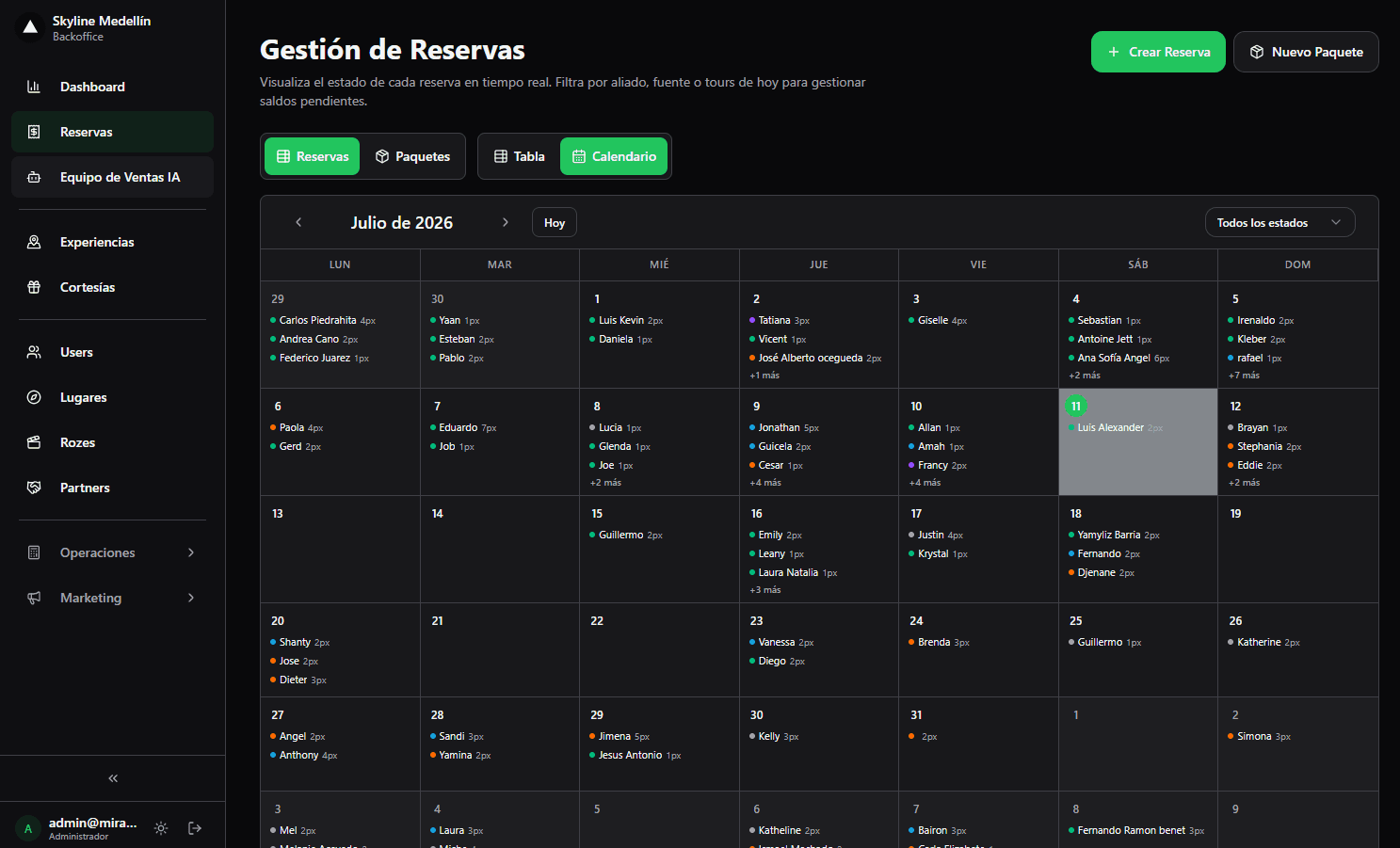
Related · Terra
How Do I Send a Tour Payment Link Over WhatsApp?
Terra generates a payment link with quickpay from a single line of chat.
ReadHow to Build a Multi-Experience Package With One Link
An itinerary is planned day by day; a package is the sellable version with a single payment link.
ReadQuickpay, Itinerary, Package, Deposit: Chat Booking Terms
Quickpay: a one-step booking with a payment link to close fast over chat.
Read