Luxor · Skyline Blog
Who to Invite to Your Partner Network (and Who Not)
Fabián Alvarez8 min read
TL;DR
- Invite people with direct contact with travelers first: hosts, guides, drivers, front-desk staff and local creators.
- Avoid inviting acquaintances with no tourism connection or no real traveler audience.
- Qualify in four questions: last contact with a traveler, channel they use, what they'd do with the link, and whether they can act without friction.
- The ambassador role is free and access is ready in minutes, so you can activate a candidate the same day.
- It's better to have a few active partners with real contact than many inactive ones.
Invite people with direct, recent contact with travelers first: hosts, guides, drivers, hostel front-desk staff and local creators. Avoid acquaintances with no tourism connection or no clear channel to share a link. Qualify with a short conversation: ask when they last talked to a traveler and what they'd do with the link today.
What does "inviting partners" mean in Luxor?
When you have access to Luxor, Skyline's ambassador program, you can invite other people to the network from your own console. That means you don't depend only on your own page to grow: you can add people who also recommend experiences, and you benefit from that growth too. But inviting anyone without a filter is the fastest way to fill your network with partners who never generate a single booking.
The real question isn't "how many partners can I add?" but "who in my circle has direct contact with travelers and can move a lead without spending three days thinking about it?". This guide gives you a priority order and a short-conversation filter to decide, in under five minutes of talking, whether someone is worth inviting as an ambassador.
Why is direct contact with the traveler the number one filter?
Because an ambassador's commission depends on the booking or redemption being attributed to their link or QR. If the person you invite isn't close to the moment the traveler decides what to do, they will never generate that attribution, no matter how much they want to help.
Think about a typical traveler's journey in a city like Medellín: they arrive at an apartment or Airbnb, ask at a hostel front desk, sit down at a restaurant, take a tour, talk to the driver who picks them up from the airport. At every one of those points there's a person with direct contact. That person is a candidate. A friend of yours who works in an office and doesn't talk to tourists all day, however eager to help, is not.
Profiles with direct contact (high priority)
These are the first ones you should invite:
- Airbnb hosts or similar accommodation hosts: they talk to the traveler before arrival and on the first day, right when the traveler is building their plan.
- Guides and drivers: already inside the travel experience, travelers naturally ask them "what else can I do?".
- Front-desk staff at hostels and small hotels: they're the default information point for anyone who didn't plan ahead.
- Local content creators: no physical contact, but direct reach with travelers researching what to do before or during their trip.
- Small or freelance travel agencies: handle traveler inquiries every day, even if they don't run their own tours.
One example: an Airbnb host in a neighborhood like Laureles receives guests all week. Every check-in is a chance to recommend a tour or a courtesy at a nearby restaurant. If you give her her own page with a link, in minutes she can start sharing it by WhatsApp with each new guest. That's the kind of partner who justifies the invitation.
Profiles without direct contact (low priority or skip)
This is where most resellers get it wrong: they invite their entire contact list thinking "more people in the network is better". It isn't, if those people can't move the lead.
- Acquaintances with no connection to tourism: they have no one to recommend anything to.
- People who only post on social media without a real traveler audience: reach doesn't help if it's not the right audience.
- Businesses that already have their own direct sales channel and don't need intermediaries: they might accept out of courtesy, but will never activate the link.
- People who ask "explain everything to me first" before trying something free: if it takes that much convincing to get someone to activate something at no cost, it will take even more to get them to actively recommend.
This isn't about being exclusive for the sake of it. It's that every invitation that doesn't convert is your time spent on follow-ups, messages and explanations that go nowhere.
How do you qualify a candidate in a short conversation?
You don't need a form or an interview. You need three or four questions that reveal whether the person has real contact with travelers and can act fast.
Step 1: ask about their most recent contact with a traveler
"When was the last time a tourist asked you what to do in the city?" If the answer is "yesterday" or "this week", there's active contact. If the answer is "I don't know, months ago" or "that's never happened to me", the profile doesn't fit, no matter how enthusiastic they are.
Step 2: ask about the channel they use
"How do you usually reply to them, WhatsApp, Instagram, in person?" This tells you whether the person already has the habit of communicating with travelers through a channel where a link can be pasted and sent in seconds. If the answer is vague or the channel is impractical for sharing a link, that's a warning sign.
Step 3: ask what they would do with the link
Give them the scenario: "If your page were ready today, who would you send it to first?" A strong candidate answers with a name or a concrete situation: "the guest arriving Friday" or "the group that messaged me yesterday". A weak candidate answers with generalities: "I guess I'd share it around" or goes silent.
Step 4: confirm they can act without friction
Ask if they have a phone with WhatsApp active and know how to use a basic link. It sounds obvious, but some profiles with real contact (a viewpoint security guard, for example) may have contact with travelers but no real ease operating a digital channel. Worth knowing before investing time in the process.
The table below summarizes how to prioritize based on the answers:
| Signal in the conversation | What it indicates | Decision |
|---|---|---|
| Contact with travelers this week | Active lead flow | Invite now |
| Clear channel (WhatsApp, Instagram) | Can share the link without friction | Invite now |
| Answers with a name or concrete situation at step 3 | Already thinking about how to use it | High priority |
| Sporadic or indirect contact | Weak lead flow | Invite, but don't expect much |
| No contact with travelers | No one to recommend anything to | Don't invite |
| Asks for extensive explanation before trying something free | High friction, low activation probability | Don't invite for now |
How do you make the invitation once you've qualified the candidate?
Once you've identified someone with direct contact and a clear channel, the process is simple: from your Luxor console you can invite other partners to the network. The candidate doesn't need to do anything complicated on their end to get started: the ambassador role is free and their own link or QR is ready in minutes. That means the qualifying conversation can end with the person already active, the same day.
This is key for the reseller: the shorter the time between the conversation and activation, the less the initial enthusiasm cools off. If you qualify someone today and send them access next week, they've probably already lost interest or forgotten what you were talking about.
What to tell the candidate at the moment of inviting them
You don't need a long pitch. Explaining that they'll have their own page with verified experiences from the network, that they earn a commission on every booking that comes from their link, and that they can start sharing it right away, is enough for most profiles with direct contact. If the person already lives off dealing with travelers, they quickly understand the value without needing more context.
What happens if you get it wrong when inviting someone?
It's not a big deal. Inviting someone who ends up with no activity costs you nothing and costs the network nothing: that person simply remains an inactive partner. The real problem isn't the one-off mistake, but building your entire growth strategy around quantity instead of quality of contact. It's better to have five active partners with real contact than thirty who never share a link.
If you've already invited a lot of people without this filter, there's no need to undo anything. Just focus your follow-up energy on those who show real activity (attributed bookings, redemptions, questions about how to share the link better) and stop pushing people who never showed concrete contact in the initial conversation.
How does this relate to the full partner network strategy?
Qualifying who to invite well is just one piece. If you want to understand how to build a complete network of affiliates and ambassadors to sell tours, from the commission structure to how to keep the active ones engaged, check out How to Build an Affiliate Network to Sell Tours: Full Guide.
What to do next
Make a list of the five people you have the most contact with who also have direct contact with travelers: a host, a guide, a driver, a local creator, a front-desk clerk. Use the four questions from this guide in a five-minute conversation with each one, and for those who qualify, invite them from your Luxor console that same day.
More about Luxor: luxor.skyln.co
Frequently asked questions
How many partners should I invite to my network to start?
There's no magic number; what matters is that each one has real, recent contact with travelers. It's better to start with three or four active people than with twenty who show no activity.
What do I do if I invited someone and they never share the link?
Nothing serious happens, they simply remain an inactive partner. Focus your follow-up on those who do show activity and don't push someone who never showed real contact in the initial conversation.
Do I need to explain a lot to a candidate for them to accept?
It shouldn't be necessary. If the person has direct contact with travelers, they quickly understand they'll have their own page and earn a commission on every booking from their link, with no need for a long pitch.
Do content creators count as direct contact even if they don't meet the traveler in person?
Yes, because they reach travelers who are researching what to do, even if the contact is digital instead of in person. What matters is that their audience is actually people who travel or are about to.
How fast can someone start recommending after I invite them?
The ambassador role is free and their own link or QR is ready in minutes, so a qualified person can start sharing it the same day as the conversation.
Luxor
See Luxor in action
The ambassador program: hosts, guides and creators earn commission for recommending experiences from their own page.
Get started with Luxor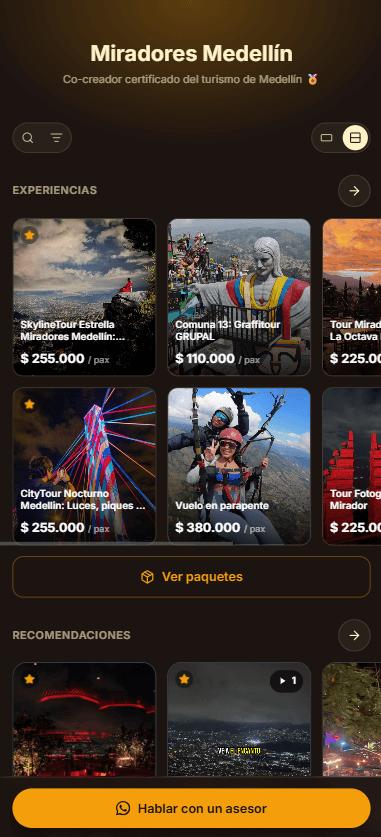
Related · Luxor
How to Build an Affiliate Network to Sell Tours: Full Guide
An affiliate network for tours pays a commission to whoever recommends from their own channel, without you having to sell it yourself.
ReadBuild a Reseller Agency Page in Luxor with Several Operators
Luxor gives every ambassador their own page with verified experiences from the whole network.
ReadHow a Boutique Hotel Turns Its Front Desk Into Sellers
Each front-desk person can have their own sales link under the hotel's root account.
Read